

Piazza Italia, where the three canyons meet
 25 minutes
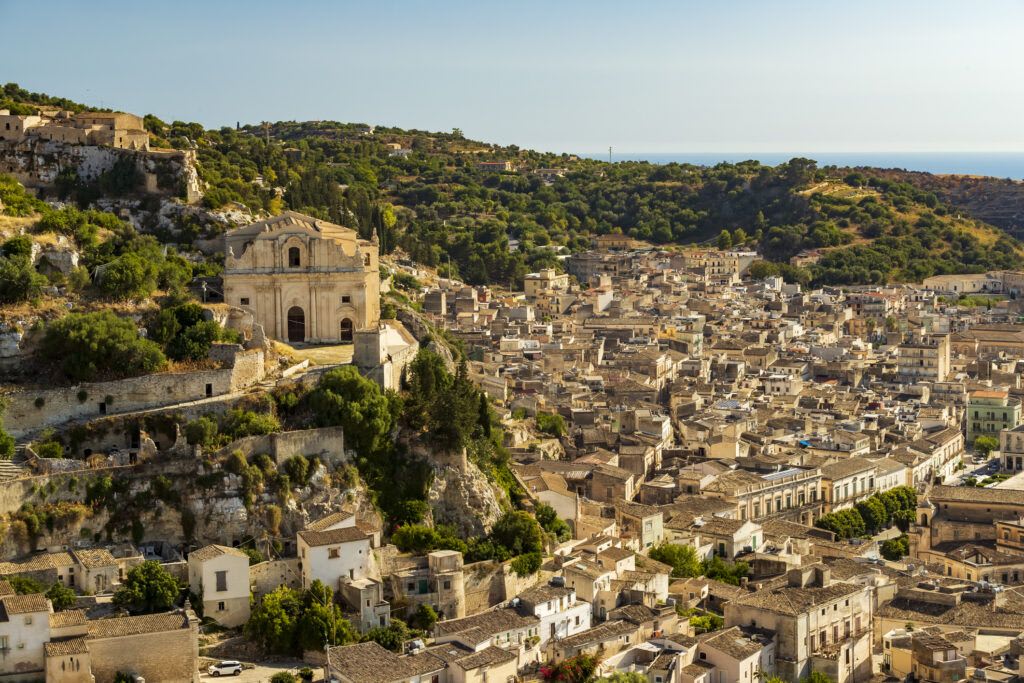
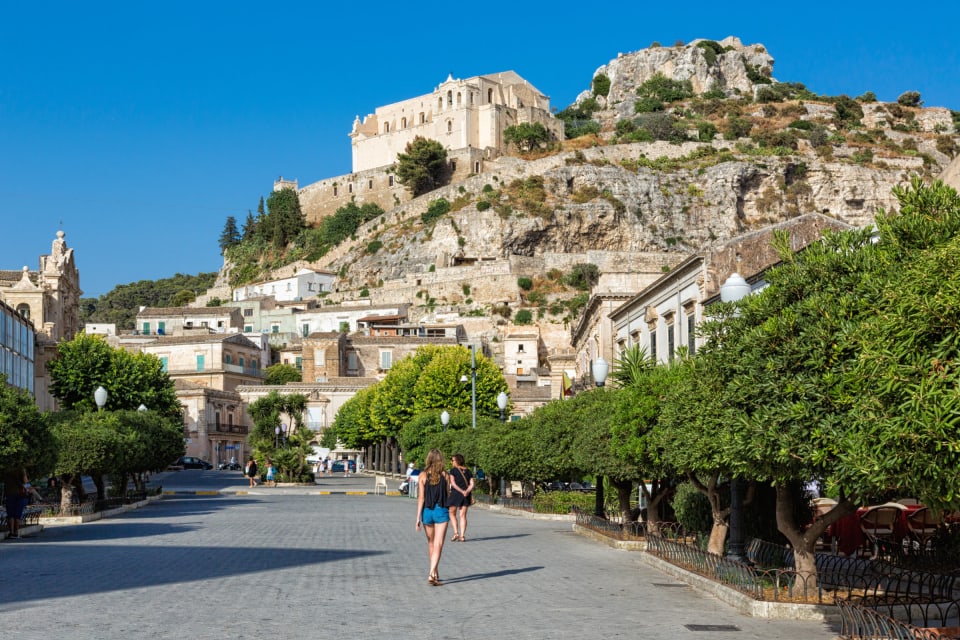
You start from Piazza Italia, a long rectangular square that covers the San Bartolomeo stream. To understand where you are, look at the sides of the city: Scicli stands where three valleys carved into the Iblean plateau meet, called cave: that of San Bartolomeo, that of Santa Maria la Nova and that of the Modica-Scicli stream. Surrounding it are three hills: San Matteo, la Croce and Monte Campagna. The baroque city was born in this intertwining of rock and water. On the square face the Chiesa Madre and, a little further on, Palazzo Fava. At the end of May, the feast of the Madonna delle Milizie takes place here.
Tip
The centre is easy to explore on foot: leave your car outside the pedestrian zone and watch for signs regarding restrictions and fees, which change.
The Chiesa Madre and the Madonna delle Milizie
 30 minutes
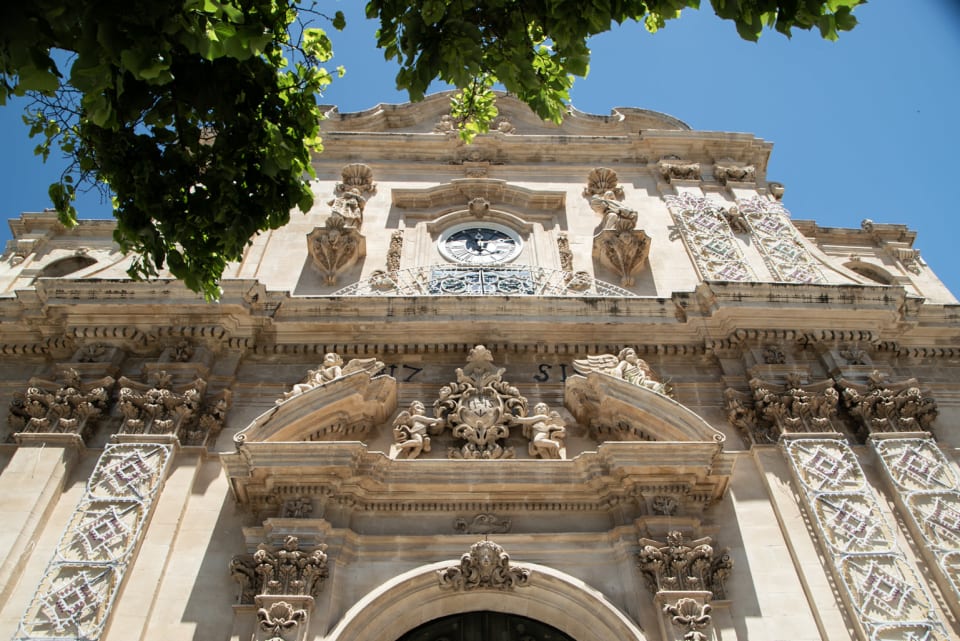
On the long side of the square is the Chiesa Madre, dedicated to Sant’Ignazio di Loyola. Built in the Seventeenth century and rebuilt after the earthquake of 1693, it became the mother church of the city in 1874, replacing the ancient church of San Matteo on the hill. Inside is the statue of the Madonna delle Milizie, the Madonna on horseback. Tradition tells that in 1091, the Virgin appeared on a white horse to help the Normans of Ruggero d’Altavilla, who were about to be defeated by the Saracens. The sanctuary dedicated to the Madonna is located in Donnalucata, where tradition places the battle. Every last Saturday in May, the square hosts the sacred representation of the battle, with a medieval parade. For the occasion, Teste di Turco are prepared, large cream or ricotta-filled pastries.
Tip
Check the times: churches are visited between services. If you happen to be here at the end of May, ask about the festival programme.
Via San Bartolomeo, Palazzo Fava and the canyon
 25 minutes
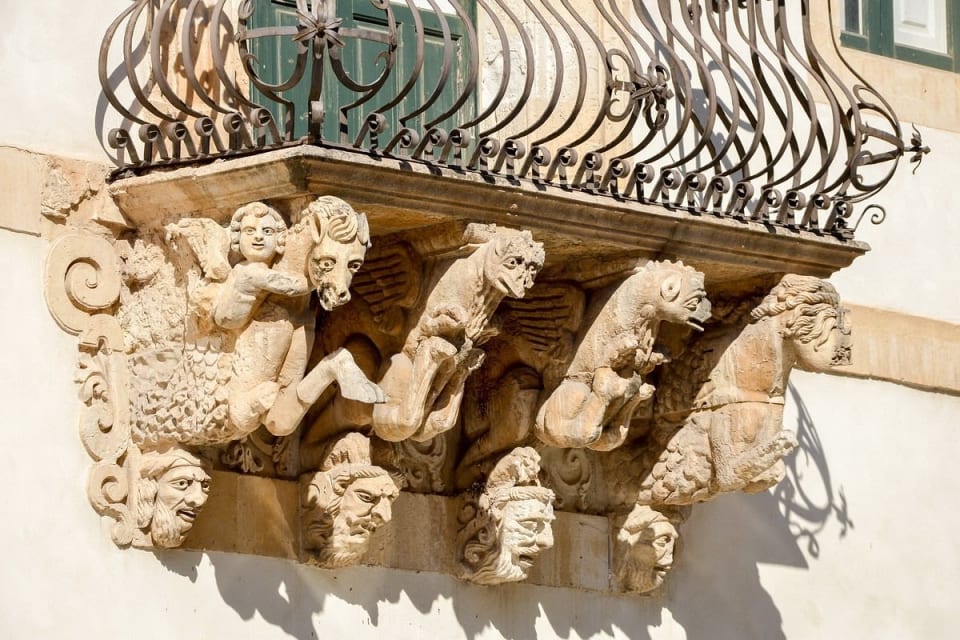
From Piazza Italia, take via San Bartolomeo. Palazzo Fava is one of the first large baroque palaces of the reconstruction and has a famous balcony, the balcony of the Griffins: the brackets are carved with griffins and bearded faces. Further along, the road enters the cava di San Bartolomeo, an urban canyon enclosed between the hill of San Matteo and that of la Croce. At the bottom, in front of the rock face, is the church of San Bartolomeo. This corner has also been a set of Montalbano: the canyon and the church appear in several episodes.
Tip
The light is better in the afternoon, when the sun illuminates the church façade and the rock face.
The Town Hall, the Vigàta police station
 30 minutes
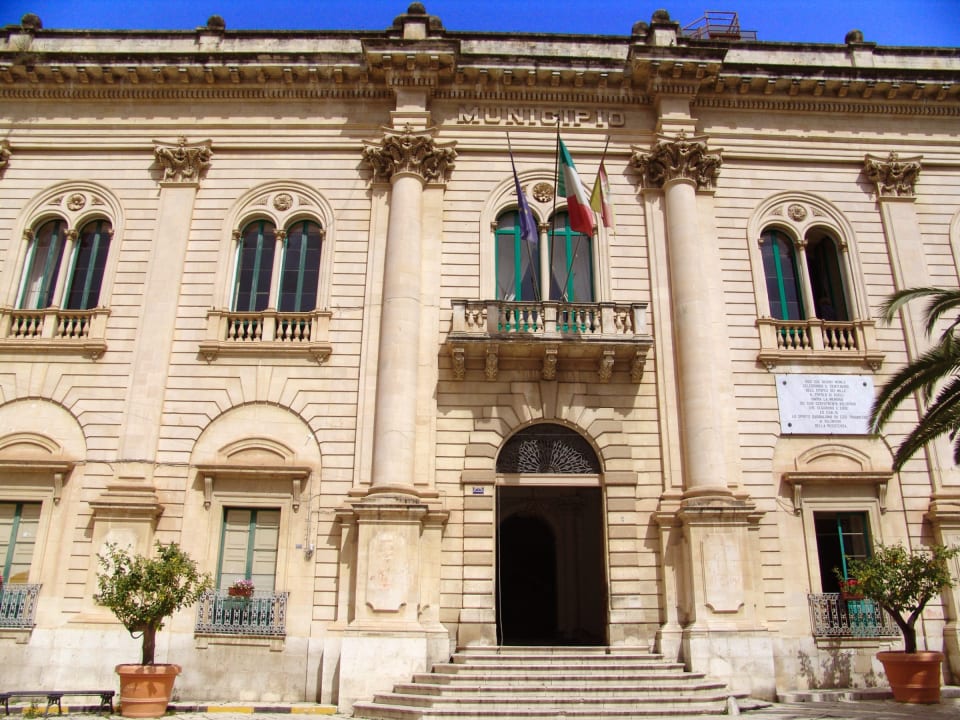
Return to the centre and take via Francesco Mormina Penna, the most elegant pedestrian axis, which widens into a small square in front of the Town Hall. The Town Hall, built in the early Twentieth century, has an eclectic façade that many recognise immediately: in the series, it is the Vigàta police station. Scicli has been the main set of Commissioner Montalbano since 1999 and of Young Montalbano since 2012. On the ground floor, you can visit the original set, with Montalbano's office; the mayor's room serves as the questor's office. Even without entering, it’s worth stopping in the small square: it’s in front of the Town Hall that Montalbano parks his Fiat Tipo in the series.
Tip
The hours and opening of the set change: check before you go. Fans of the series can combine this stop with the Montalbano Experience audio guide route from marzamemi.com.
San Giovanni Evangelista
 25 minutes
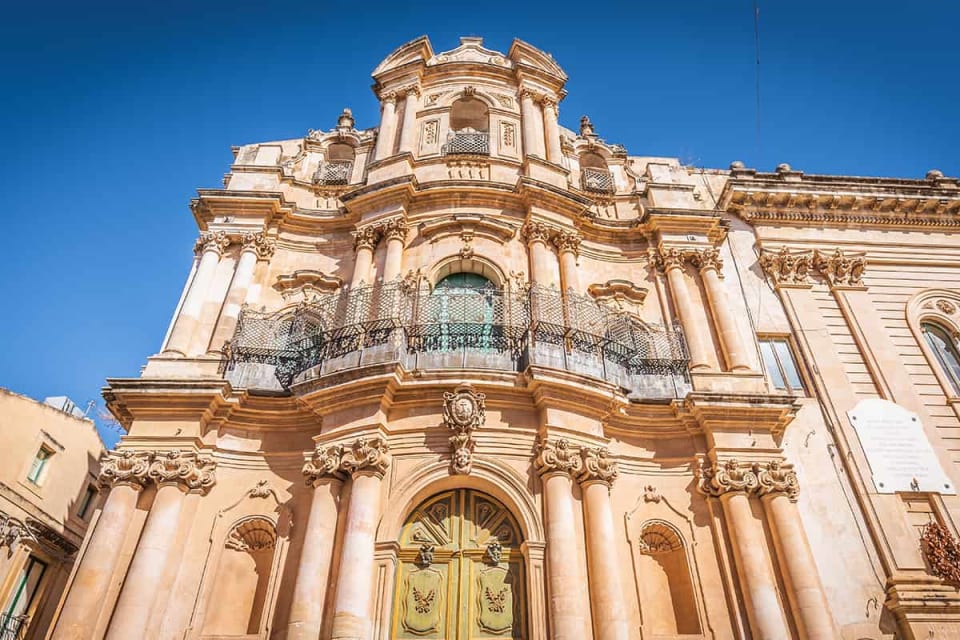
Next to the Town Hall stands the church of San Giovanni Evangelista, rebuilt in the Eighteenth century after the earthquake. The concave-convex façade, in three tiers, has a wrought iron grille on the second level, and a staircase that follows its curve. The façade seems almost to jut out towards passers-by, and alongside the sobriety of the Town Hall, gives the small square a striking effect.
Tip
View the façade from a distance, from the beginning of the street: from there, you can see how the curve of the church and the staircase move together.
San Michele, Palazzo Spadaro and the Gruppo di Scicli
 35 minutes
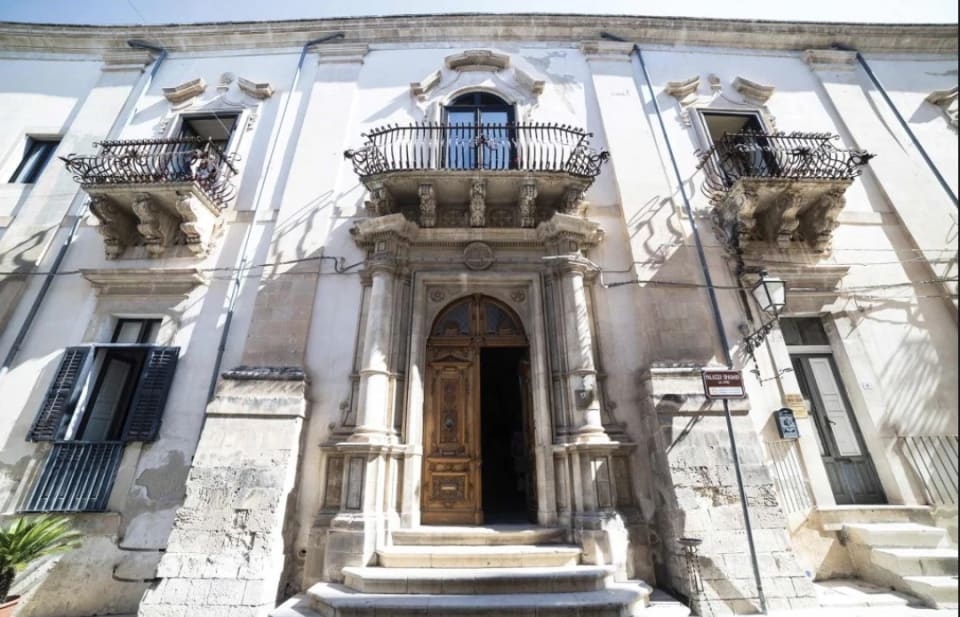
A little further on is the church of San Michele Arcangelo, with its Eighteenth-century façade, nestled between two noble palaces: Palazzo Spadaro and Palazzo Bonelli Patanè. Palazzo Spadaro is recognised by its eight wrought iron balconies and rococo geometric decorations. It houses a pinacoteca with works by the Gruppo di Scicli, the artists linked to the city, including Piero Guccione, Franco Polizzi and Franco Sarnari. The palace also has a small bridge, called the lovers' bridge. The street is a gallery of Eighteenth and Nineteenth-century façades: for UNESCO, together with Palazzo Beneventano, it is a masterpiece of late baroque.
Tip
Look up: balconies, brackets and portals are the most beautiful part of the palaces.
Palazzo Bonelli Patanè, the Ancient Pharmacy and the Costume Museum
 30 minutes
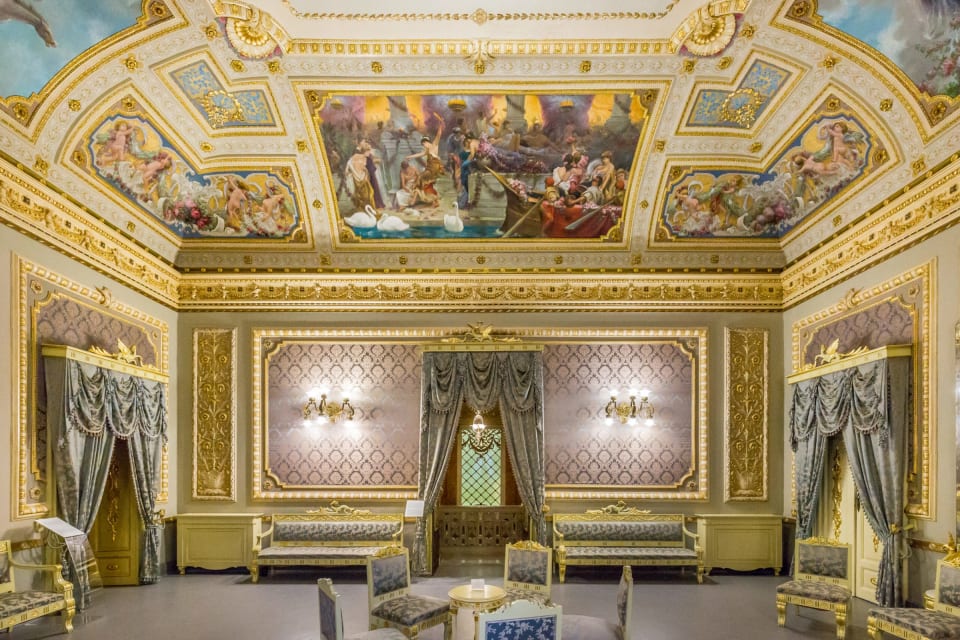
Palazzo Bonelli Patanè is from the 19th century, but the interior is entirely frescoed between the end of the 19th century and the beginning of the 20th century and retains original furnishings and tapestries. It is one of the last testimonies of an aristocratic and bourgeois world. On the same street is the Antica Farmacia Cartia, from 1902, and the Museum of Costume and Cuisine, in the former monastery of San Michele, with garments and fabrics from the Iblean tradition. These are three small visits just a few steps from each other: you can choose just one.
Tip
Entries are often timed and by reservation: check in advance, especially on weekends.
Palazzo Beneventano
 20 minutes
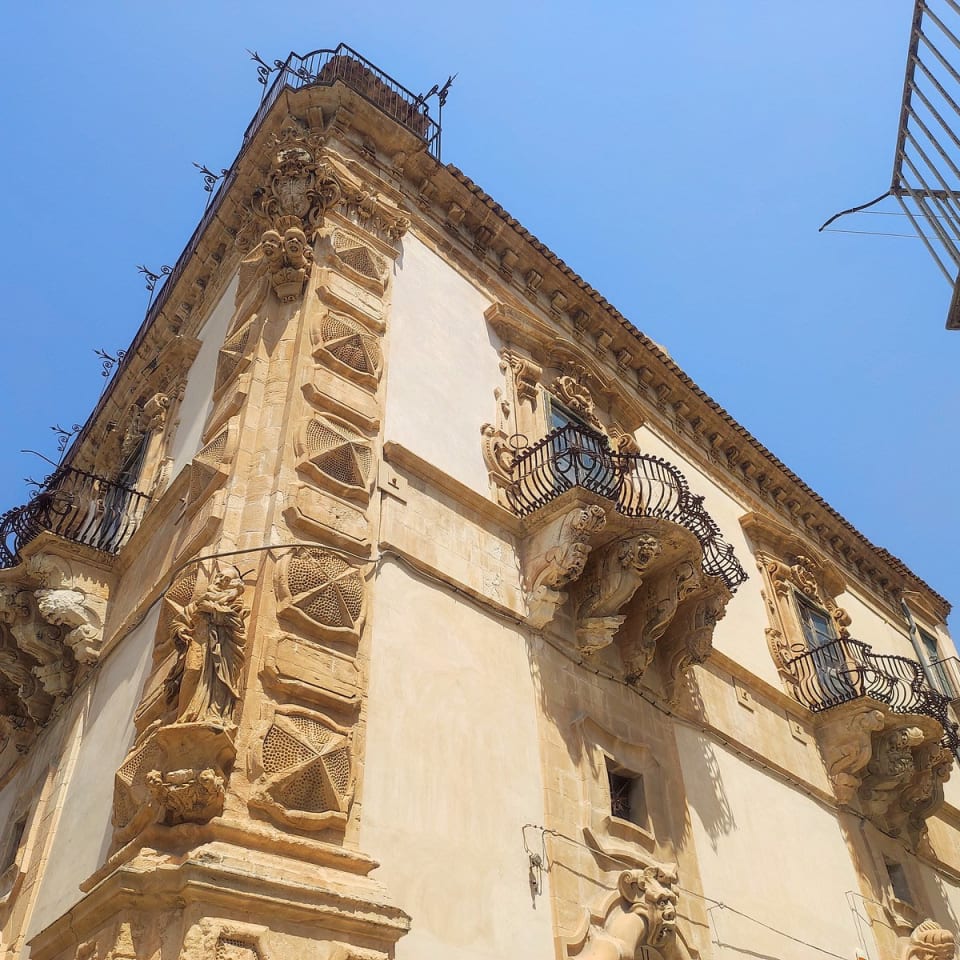
From Via Nazionale, in a side street, you find Palazzo Beneventano, from the 18th century and considered one of the most beautiful examples of late Sicilian Baroque. According to the English art historian Anthony Blunt, it is the most beautiful Baroque palace in Sicily. It has two façades joined by a sculpted corner, with mask heads, Moorish heads and fantastic animals on the brackets, and balconies with bulging railings. It is a palace to be viewed calmly, walking around the corner. This is the point where you understand why Scicli is on the UNESCO list.
Tip
Turn the corner: the most unusual decorations are found on the balcony brackets.
Santa Maria la Nova and the cave
 30 minutes
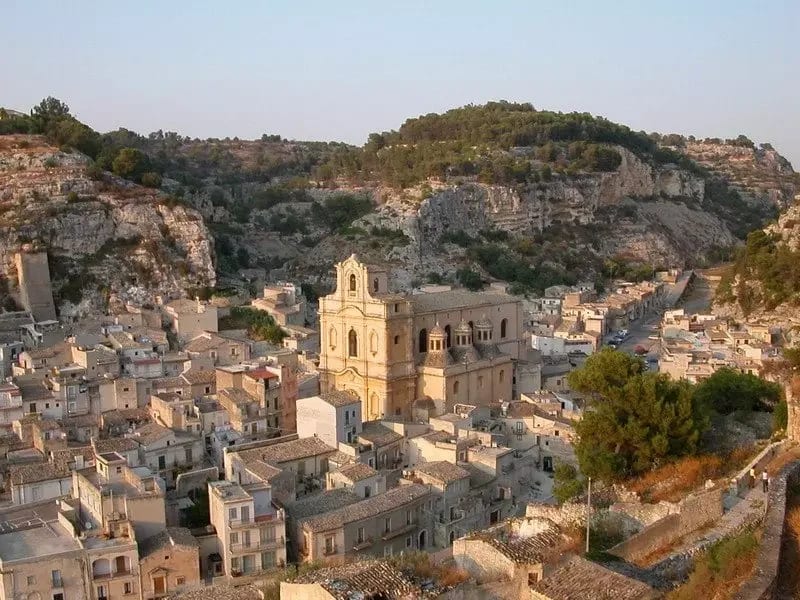
At the eastern end of the centre, you enter the cave of Santa Maria la Nova, a narrow urban corridor between the rock and the houses. At the end, the church of Santa Maria la Nova closes the cave with its three-tiered façade and bell tower. Its origins date back to the Byzantine era. Inside, there is a wooden statue of the Risen Christ, by the Catanese sculptor Francesco Pastore, whom the people of Scicli call the Uomo Vivo. A little higher, via a staircase leading to a paved forecourt, is the church of Consolation, from the 17th century, with a mosaic marble flooring.
Tip
If you have little time, choose Santa Maria la Nova: the cave is worth the detour even if the churches are closed.
The hill of San Matteo and Chiafura
 45 minutes
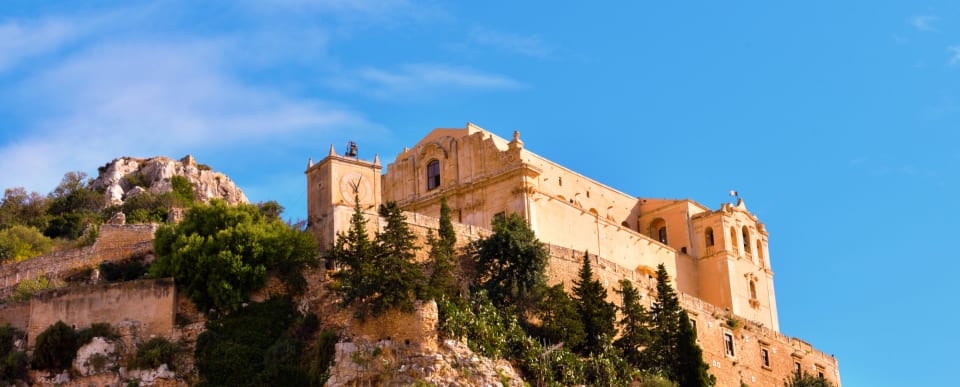
End the day with the climb to the hill of San Matteo, about five hundred metres of uphill walking. At the top, the church of San Matteo was the oldest in Scicli and the main one in the city until 1874. Today it is in poor condition and often not open, but from here the centre can be seen in its entirety, with the three caves at its feet. On the hillside extends Chiafura, an ancient neighbourhood of cave houses inhabited until the 1960s. On the ridge are the Castellaccio, a Norman tower, and the castle of the Three Cantons, which controlled the meeting point of the three valleys. Chiafura is now only visitable on special occasions, with guided tours.
Tip
Go up in the late afternoon, with suitable shoes and water: the light is beautiful and the heat decreases.
Route map
On phone and tablet: one finger scrolls the page, two fingers move the map.
Frequently asked questions
You need half a day for Via Mormina Penna, Piazza Italia and the palaces. With the museums, the Santa Maria la Nova quarry and the San Matteo hill, you will need a full day.