

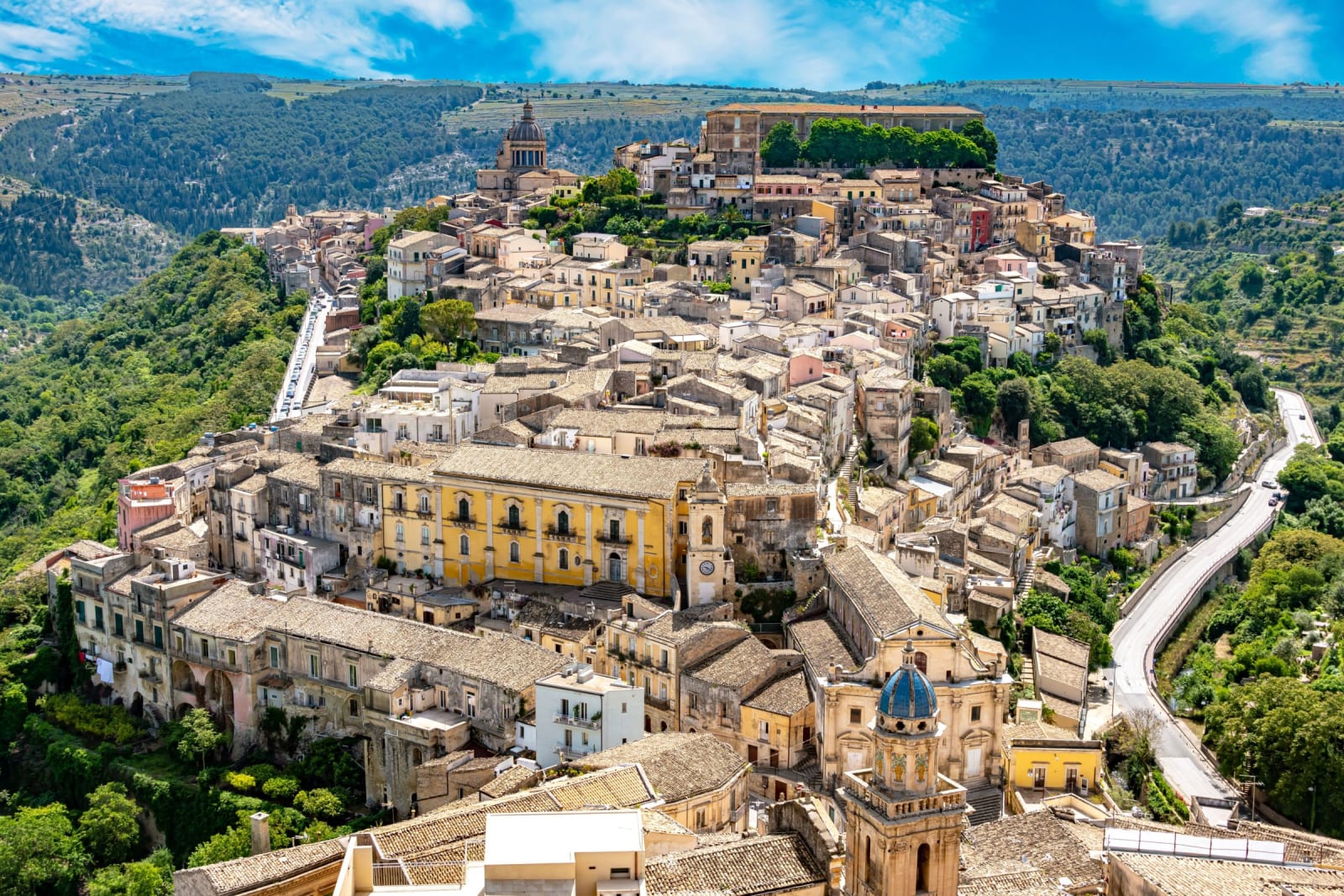
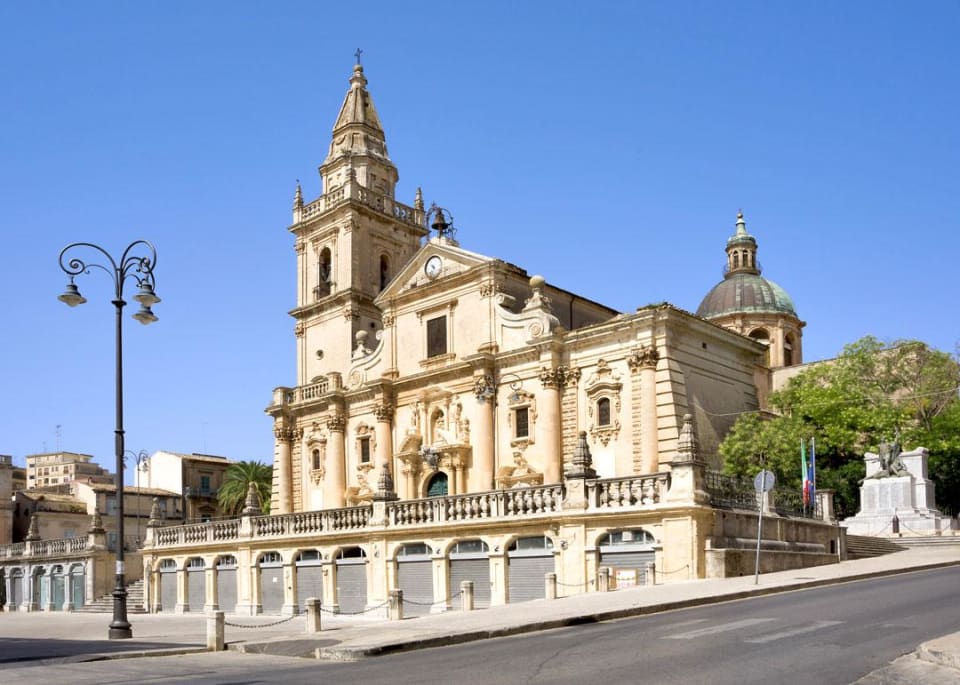
The Cathedral of San Giovanni Battista, in the upper town
 15 minutes
Ragusa has a double soul. Ragusa Superiore, where you start, is the new part, built on the hill after the earthquake of 1693. Ragusa Ibla, on the opposite hill, is the old town, rebuilt on the medieval layout. The centre almost has the shape of a saddle: you descend from one hill and ascend to the other. The Cathedral of San Giovanni Battista is the most important church in the upper part. Baroque and from the 18th century, it stands atop an elevated forecourt with a wide and decorated façade and the bell tower on the left side. Since 2002, Ragusa has been part of the UNESCO sites of the late Baroque towns of Val di Noto.
Tip
If you stay in Ibla, you can skip this descent and start from stop 5. If you arrive by car, you can leave it in the upper part and do the rest on foot: check the signs for restrictions and fees.
Santa Maria delle Scale and the view of Ibla
 25 minutes
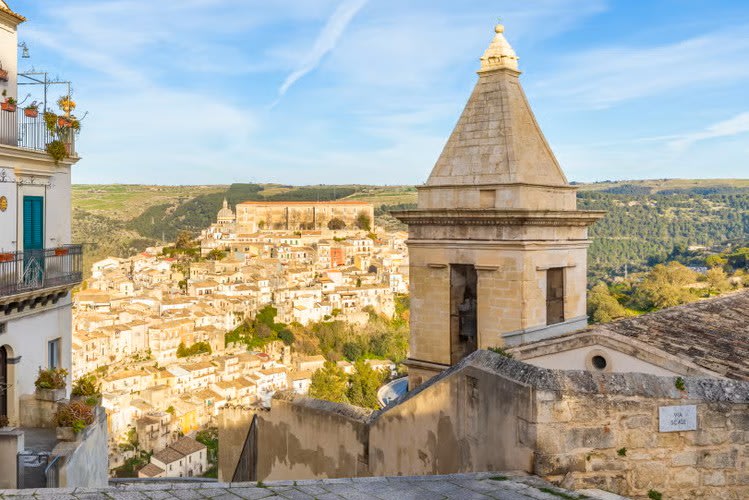
Descending towards Ibla, you encounter the church of Santa Maria delle Scale, named after the steps that connect the upper and lower parts of the town. It is among the oldest churches in Ragusa and preserves parts from different eras, some even predating the earthquake. The reason to stop is the view: from the steps, you can see Ibla spread out on the opposite hill, with its roofs, domes, and bell towers. It is one of the most photographed views of Ragusa.
Tip
The descent is steep and stepped: keep your hands free and wear shoes with a good sole.
Palazzo Cosentini and Salita Commendatore
 25 minutes
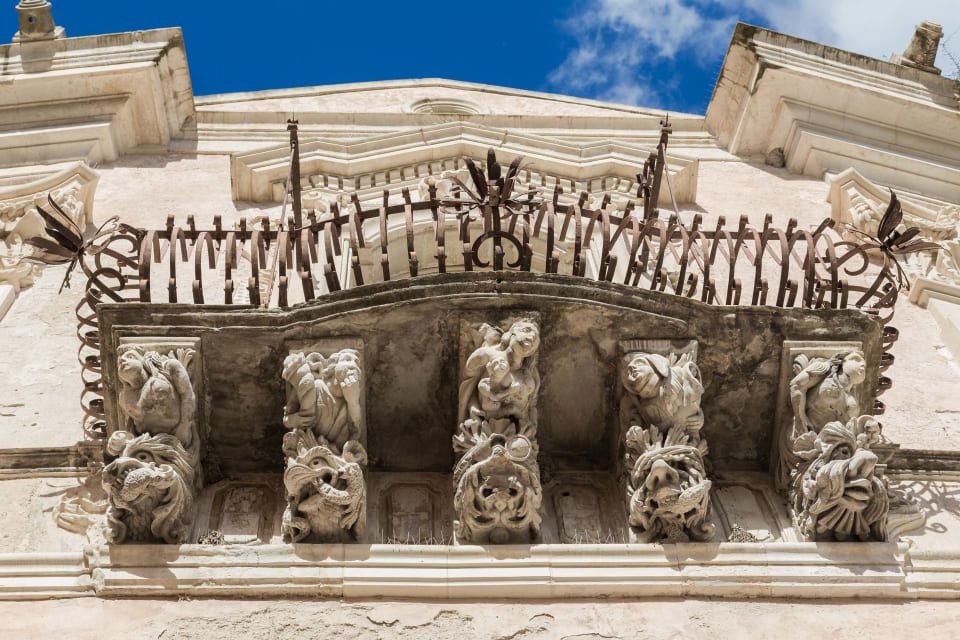
Further down, the route reaches Palazzo Cosentini, built at the end of the 18th century for Baron Raffaele Cosentini. It is located at the junction of two important streets: Salita Commendatore, which connects the lower part with the upper part, and the road that led out of town. Its pride is the balconies: the brackets are carved with grotesque masks, musicians, and figures of abundance. The balcony on the staircase has five masks holding symbolic animals in their mouths, including a snake and a scorpion.
Tip
Look up and see the brackets: each mask has a different expression.
Santa Maria dell’Itria and its bell tower
 20 minutes
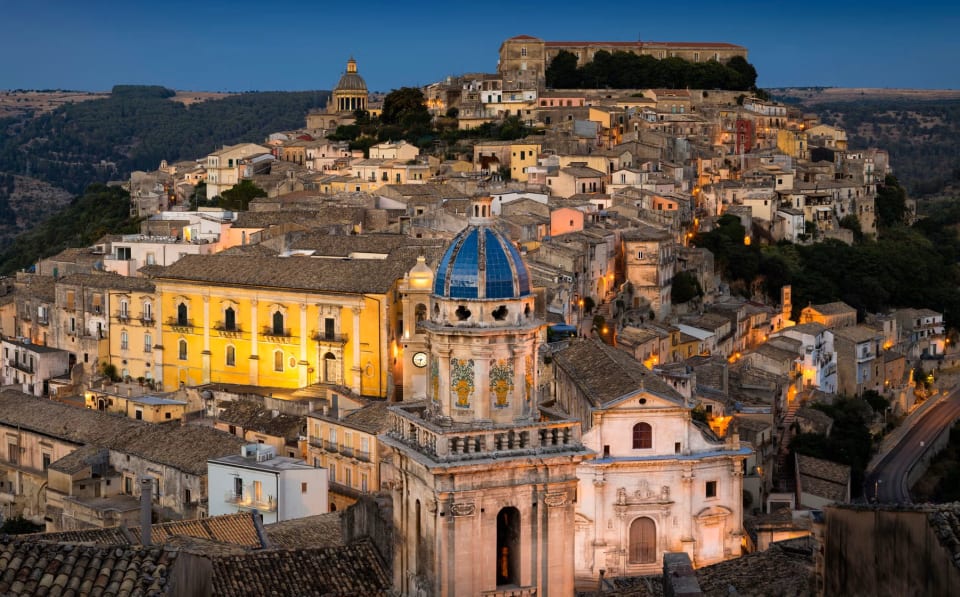
Climbing back towards Ibla, you find Santa Maria dell’Itria, recognizable from afar by its bell tower with a decorated top. It is one of the most photographed churches in the town. It has 14th-century origins: it was founded by the Counts of Modica from the Chiaramonte family and belonged to the Commandery of the Knights of Malta, from which the Salita Commendatore takes its name. The Baroque appearance comes from a reconstruction in the early 18th century.
Tip
If the church is open, go in to see the carved stone altars. The hours vary: check in advance.
Piazza Duomo and the Cathedral of San Giorgio
 35 minutes
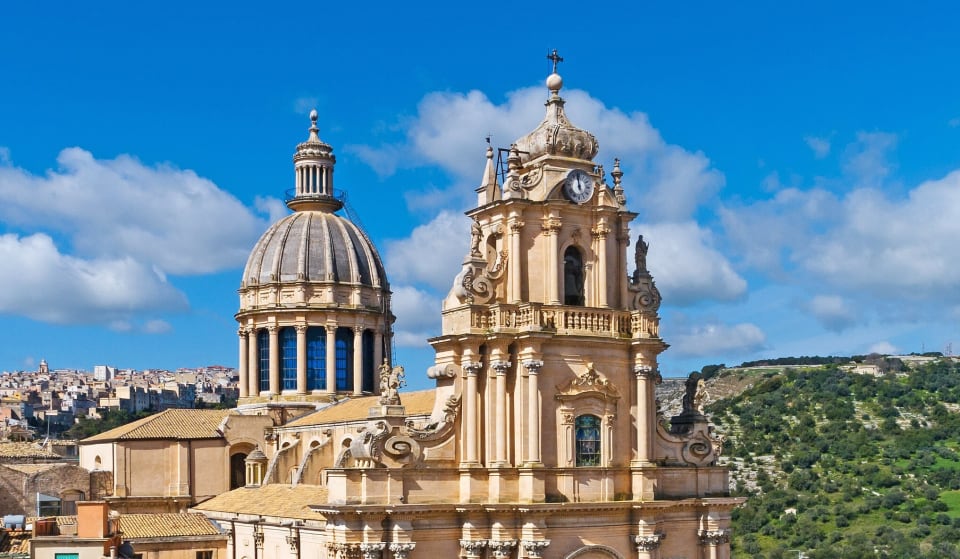
You arrive in the heart of Ibla, in Piazza Duomo, a long square with a slight slope. The Cathedral of San Giorgio stands atop a staircase: it is a masterpiece of Sicilian Baroque by Rosario Gagliardi, designed in 1738 and completed in 1775. The tower façade has a dense play of columns. Gagliardi oriented it slightly askew to the square, so that the dome would be clearly visible from afar. The dome is neoclassical, from 1820, and 43 metres high. The cathedral stands where there was previously another church of San Giorgio, destroyed by the earthquake of 1693: only the portal remains, which you will see at the end of the route.
Tip
Sit on a bench in the square: from there, the façade and dome can be seen together. The hours for entry vary: check.
The Circolo di Conversazione and the Arezzo palaces
 25 minutes
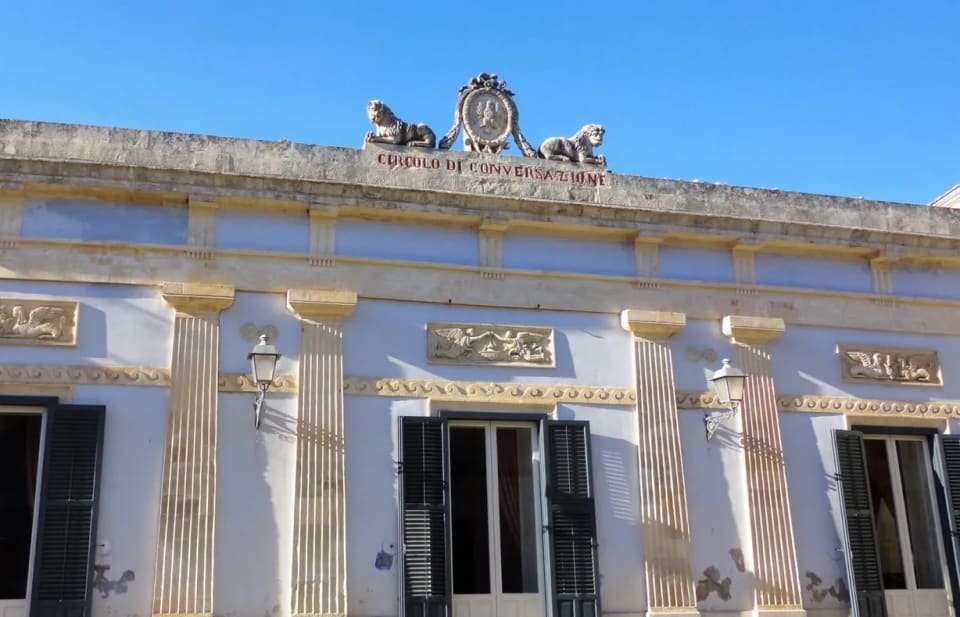
In the same square, there is the Circolo di Conversazione, also known as Caffè dei Cavalieri. It is a low neoclassical building from the 19th century, originally a meeting place for the local nobility. The ballroom has a ceiling frescoed in the late 19th century. The Circolo also appears in the series of Commissario Montalbano, and Piazza Duomo is, in the series, the meeting point for the main characters. Not far away are Palazzo Arezzo di Donnafugata and Palazzo Arezzo di Trifiletti, two residences of the Arezzo family.
Tip
The interiors of the palaces are visited only at certain times or with guided tours: inquire in advance.
Piazza Pola and the church of San Giuseppe
 20 minutes
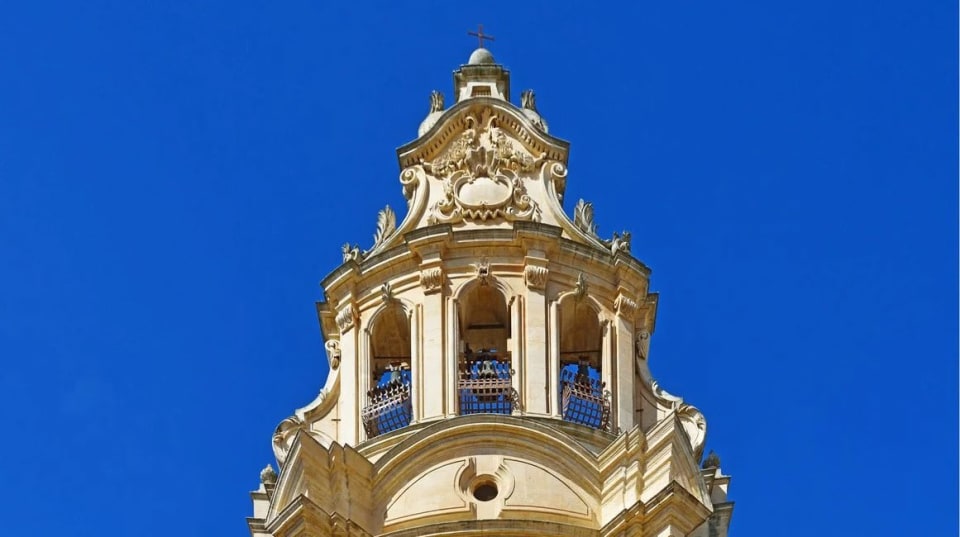
From Piazza Duomo, you descend towards Piazza Pola, one of the most elegant in Ibla. The church of San Giuseppe, rebuilt in the 18th century and attributed to Rosario Gagliardi, has a curved façade rich in sculptures, with statues of the saints of the Benedictine Order. It was linked to the nearby monastery of the Benedictines.
Tip
Climb the few steps and turn around: the square is better seen from the church entrance.
The Portal of San Giorgio and the Giardino Ibleo
 40 minutes
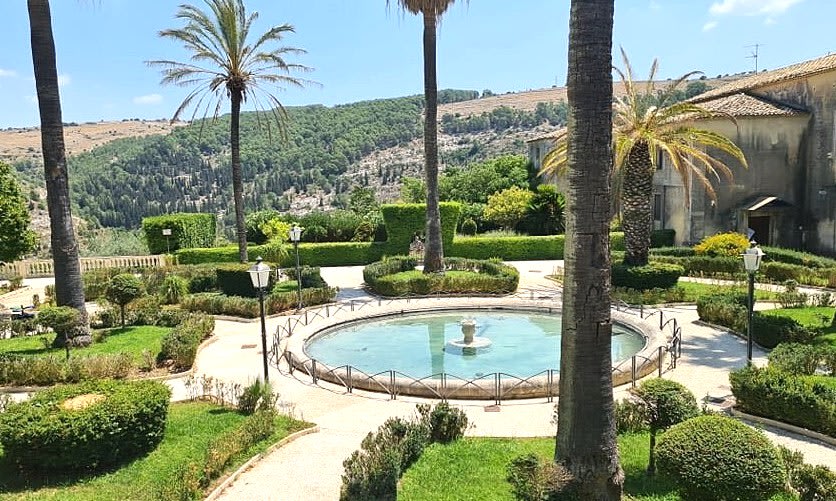
Before the garden, at the entrance, there is the Portale di San Giorgio: it is what remains of the ancient church destroyed in 1693. It is a Catalan-Gothic portal from the 14th century, made of pink stone. The Giardino Ibleo concludes the route. Created in the 19th century with the contribution of the local nobility, it sits on a cliff overhanging the Irminio valley. It has tree-lined avenues, benches, a fountain, and three small churches: San Vincenzo Ferreri, San Giacomo Apostolo, and the Cappuccini. From the viewpoints, the view opens up over the valley and the hills.
Tip
It is the right place for a break at the end of the route: there is shade and there are benches.
Route map
On phone and tablet: one finger scrolls the page, two fingers move the map.
Frequently asked questions
Ragusa Ibla is the ancient city, rebuilt after the earthquake of 1693 on the medieval layout. Ragusa Superiore, or simply Ragusa, is the new part, built on the hill opposite. They are two districts of the same city, separated by a valley.