

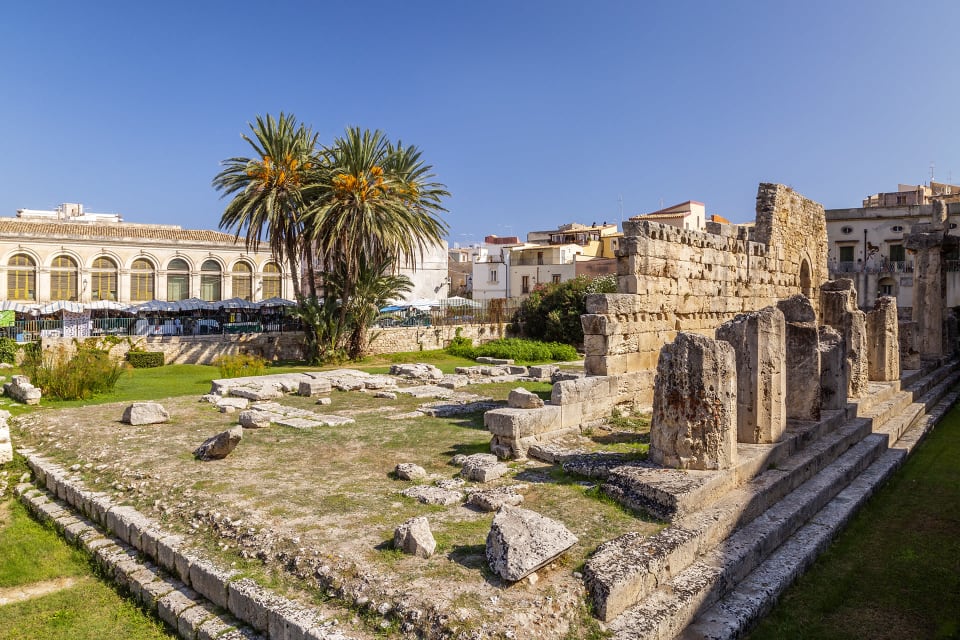
The Temple of Apollo and the market
 25 minutes
You can walk from Siracusa across the Ponte Umbertino, built in the 19th century and named after King Umberto I. Just after, in Largo XXV Luglio, there are the remains of the Temple of Apollo, from the early 6th century BC: it is considered the oldest Doric temple in Sicily. Over the centuries, it has been a Christian church in the Byzantine era, a mosque in the Arab period, a Norman basilica, and then part of a Spanish barracks. It was freed from surrounding buildings only in the early 20th century: today the columns emerge amid the traffic. Behind the temple, in the morning and every day except Sunday, there is the Ortigia market: the right place to understand the rhythm of the island.
Tip
Driving here is a problem, with the ZTL and narrow alleys: park in Siracusa and walk here. The market is only in the morning.
Piazza Archimede and the Fountain of Diana
 20 minutes
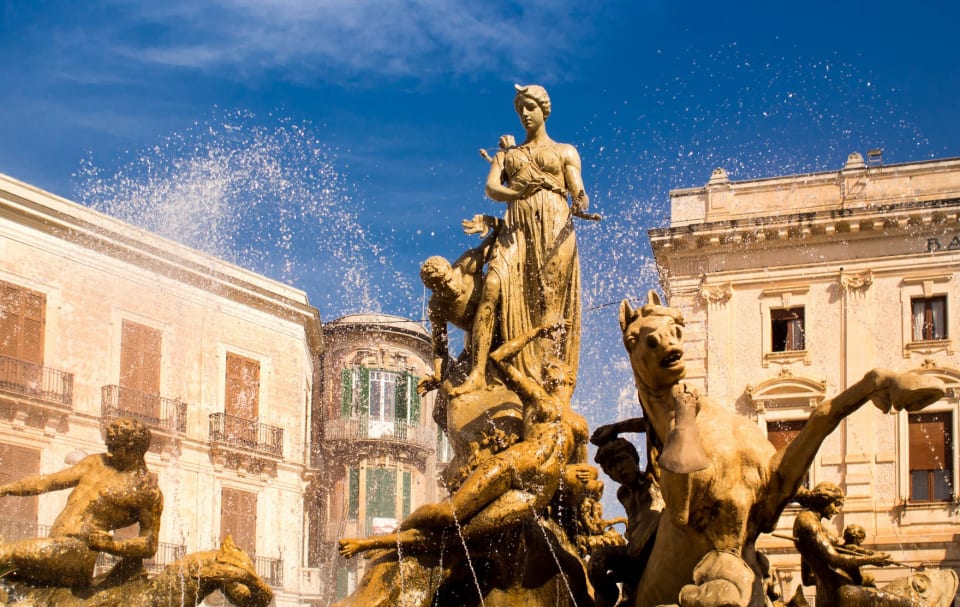
Continue to Piazza Archimede, an open square only in the second half of the 19th century: much more recent than the surrounding alleys. At the centre is the Fountain of Diana, created by Giulio Moschetti built between 1906 and 1907, in reinforced concrete. It tells the myth of Aretusa: Diana, with bow and dog, dominates the scene; at her feet, Aretusa is about to transform into a spring to escape Alfeo. In the basin, four tritons ride two sea horses and two sea monsters. Surrounding it are buildings from the 15th to the 20th century, including the Palazzo dell’Orologio and the 15th-century Palazzo Lanza Bucceri.
Tip
Get closer to the basin: the tritons and masks can only be seen well up close.
The Giudecca, San Giovannello and the Jewish bath
 30 minutes
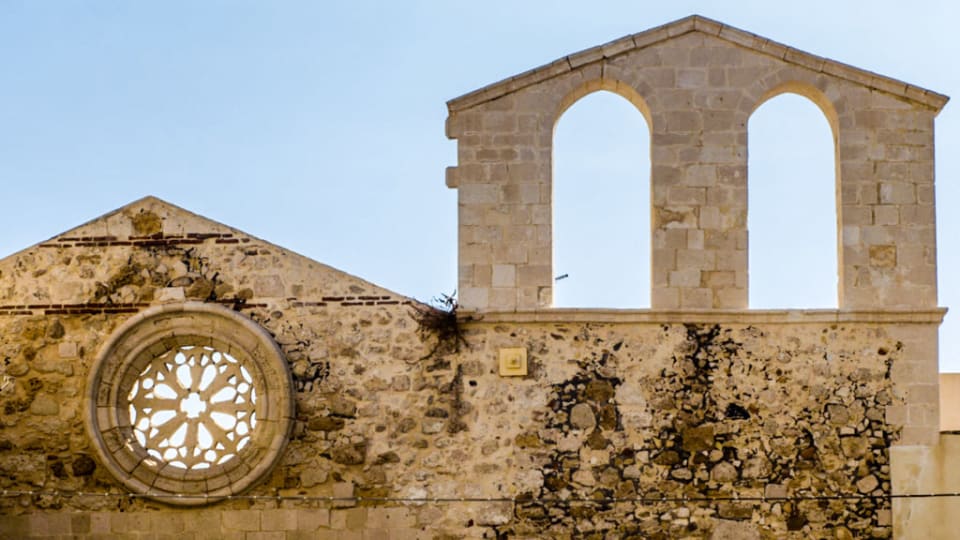
Towards the interior of the island, you enter the Giudecca, the Jewish quarter, which retains the narrow layout of the ancient settlement. The Jews left the city in 1492, when the king ordered their expulsion; after the earthquake of 1693, the buildings were reconstructed in a uniform style, so few visible signs of that world remain. In Piazza del Precursore, there is the façade of San Giovannello, which stands on a basilica from the 4th century and has the appearance of 1380, with a pointed portal and rose window. In the basement of a building, now a hotel, you can visit the Jewish bath (miqwe): a pool fed by spring water, about twenty metres deep, among the oldest in Europe.
Tip
The Jewish bath is visited only at certain times, usually with a guide: check in advance.
Piazza Duomo and the Cathedral, a Greek temple
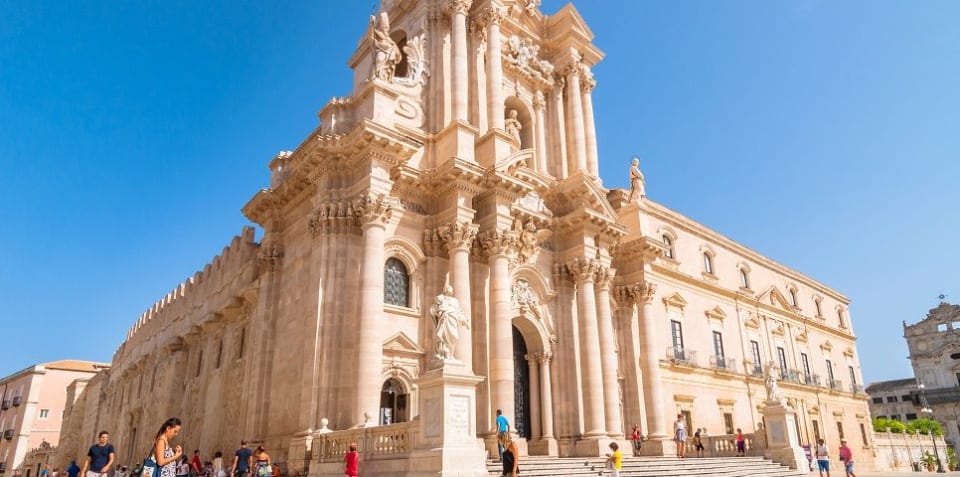 45 minutes
Piazza Duomo is the highest point of the island, a large elliptical square surrounded by Baroque buildings. The Cathedral is the most surprising monument: in 480 BC, the tyrant Gelone had the Temple of Athena built here to celebrate the victory over the Carthaginians at Himera; in the 7th century, Bishop Zosimo transformed it into a church, bricking up the spaces between the columns. The Baroque façade is instead from the 18th century: it was designed by Andrea Palma after the earthquake of 1693, and completed in 1753. The two statues on either side are Saint Marciano and Saint Lucia. The Doric columns of the temple can still be recognised on the side of the church and inside, where the central nave has a 16th-century wooden ceiling. The Archbishop’s Palace and the Palazzo Beneventano del Bosco also overlook the square.
Tip
Enter: the columns inside are the most beautiful part. Entry may be charged and times vary: check. Shoulders and knees covered.
The Vermexio and Santa Lucia alla Badia
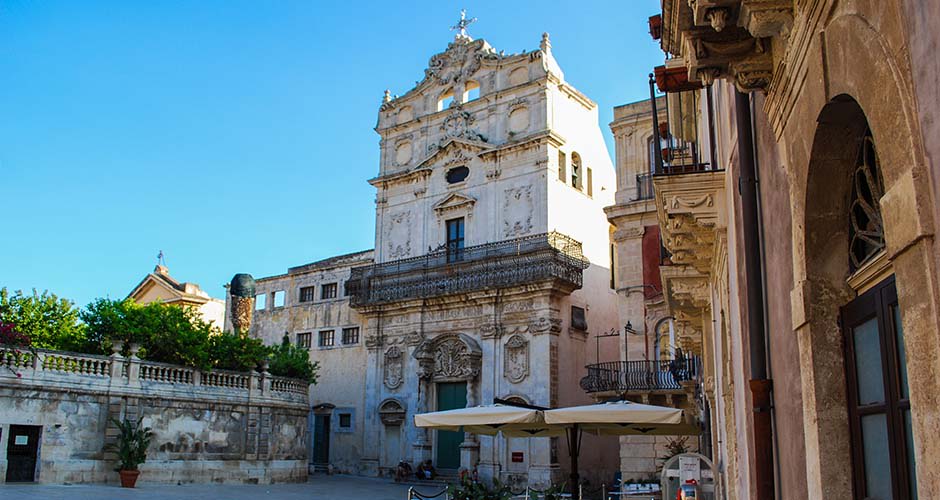 30 minutes
On the same square is the Palazzo del Vermexio, the town hall, built at the beginning of the Seventeenth Century to a design by Giovanni Vermexio as the seat of the city government. Look in the top left corner for a small carved gecko: it is the architect's signature. At the end of the square, the church of Santa Lucia alla Badia, dedicated to the city's patron saint, has a tall, narrow façade with an upper order in Rococo style. Here, from 2011, the Burial of Saint Lucia by Caravaggio, painted in 1608, was displayed: since 6 December 2020, it has returned to Santa Lucia al Sepolcro, in the Borgata neighbourhood, on the mainland.
Tip
Many guides still indicate Caravaggio in this church: it is no longer there. To see it, go to Santa Lucia al Sepolcro and check the times.
The Foro Vittorio Emanuele II and the Fonte Aretusa
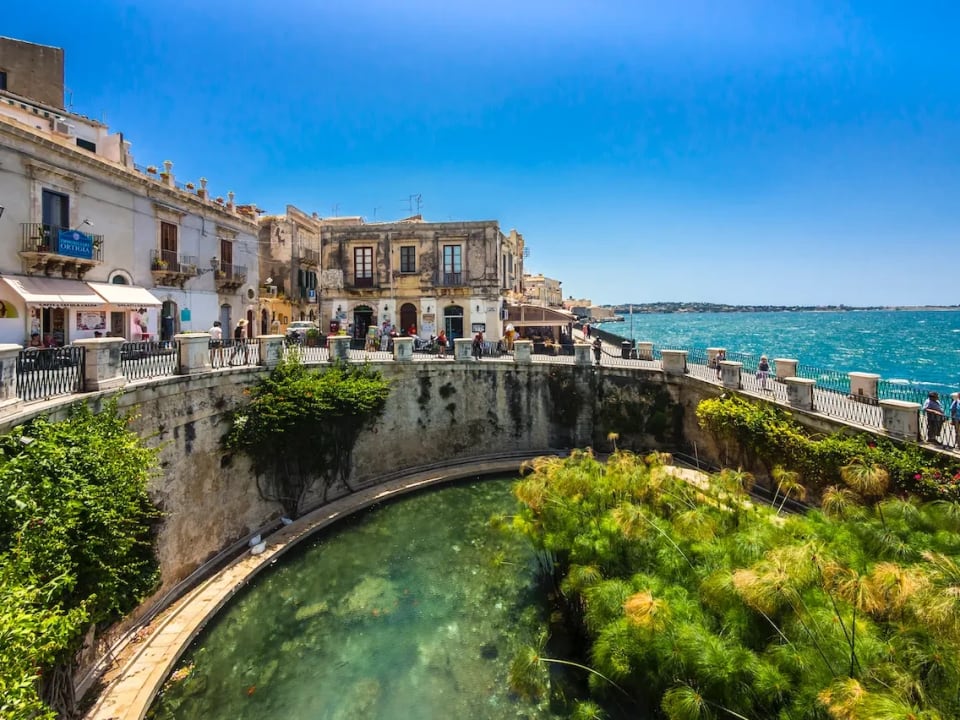 25 minutes
You descend to the sea and stroll along the Foro Vittorio Emanuele II, the seafront built to celebrate the Unification of Italy, with trees and benches. Along the road, there is the fontana degli Schiavi, a drinking trough from the 16th century carved into the walls, and a small garden with ancient ficus trees. At the end, you arrive at the Fonte Aretusa, a pond of fresh water full of papyrus, just a few steps from the sea: the locals call it a funtana re papiri. According to legend, Aretusa, the nymph of Diana, fled from the river Alfeo and the goddess transformed her into a spring; Alfeo, turned into an underground river, still feeds her.
Tip
Look at the fountain from above: it’s already beautiful without a ticket. To walk around its perimeter, a ticket may be needed: check if it’s open during that period.
Maniace Castle
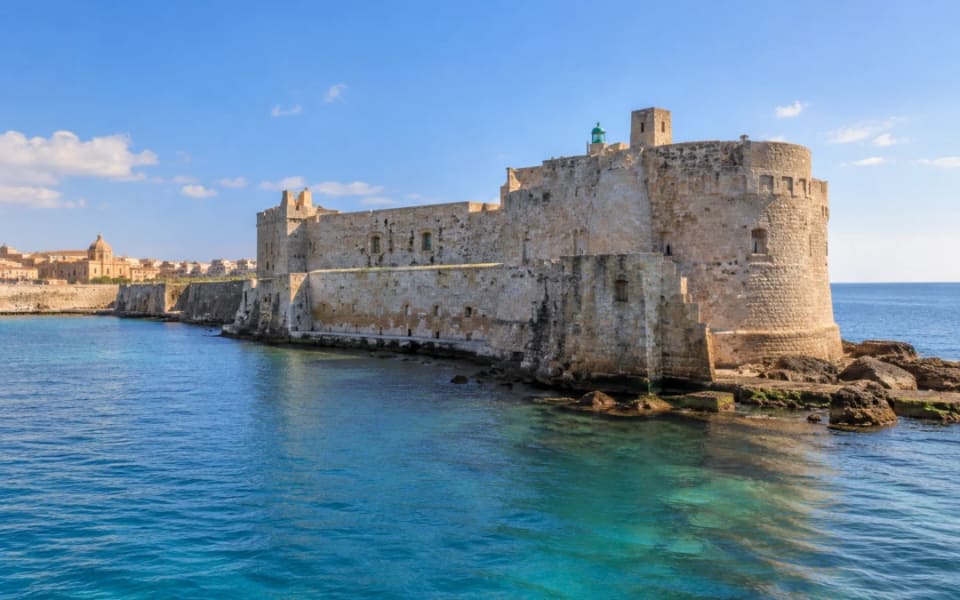 45 minutes
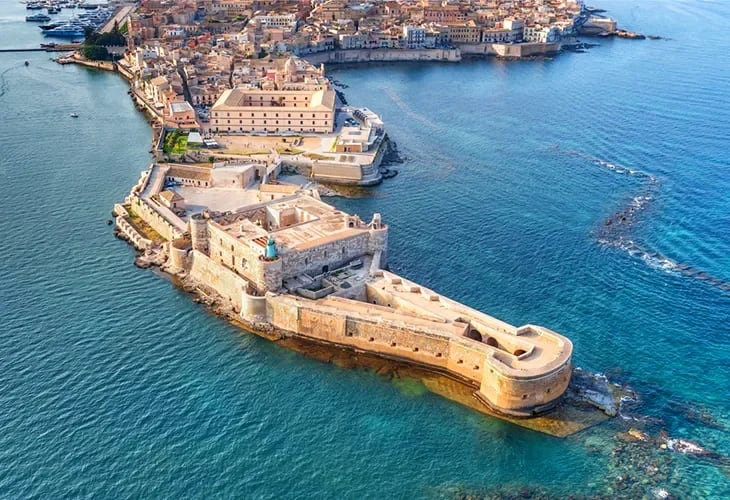
At the southern tip of the island is the Maniace Castle, built between 1232 and 1240 at the behest of Frederick II, with a square plan and four cylindrical towers at the corners. From its position, it controlled the port and the city. The name recalls the Byzantine general George Maniace, who in 1038 helped to reclaim Siracusa from the Arabs. Inside, the rooms are bare, but they have large pointed arches beneath which you walk. The courtyard has two levels: from the upper floor, you can see the round arches that you will encounter later when descending.
Tip
It’s worth the ticket: enter and walk through the rooms. Check opening hours and closing days.
The Levante Promenade and Cala Rossa
 40 minutes
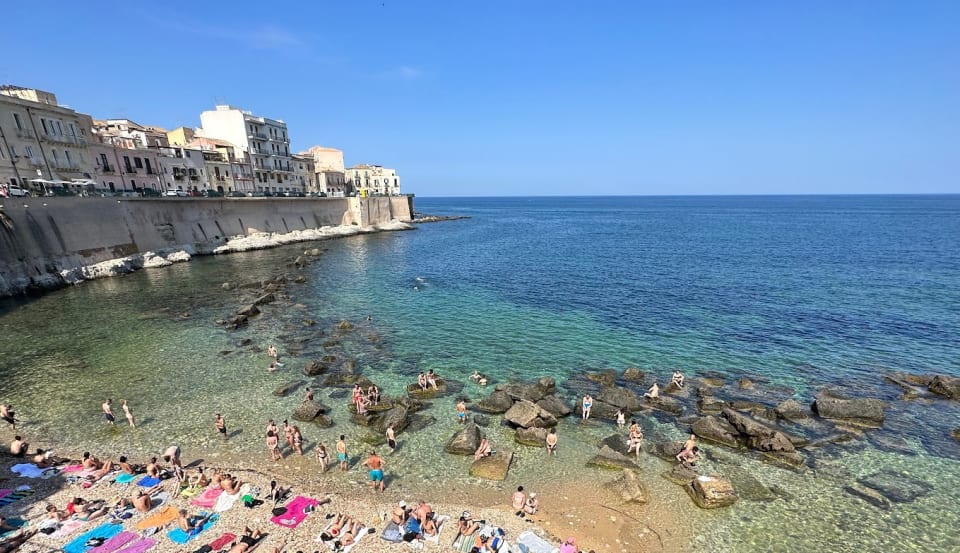
On the eastern side of the island, the Levante Promenade runs steeply over the sea. You pass by the Enzo Maiorca viewpoint, a belvedere with four benches dedicated to the champion who in July 1988 reached 101 metres in free diving. A little further on, a steep staircase descends to the small beach of Cala Rossa, whose name comes from the colour of the sand: clear sea, fresh water showers, and in the afternoon, shade.
Tip
In summer, bring your swimsuit: the staircase is steep and the beach is small.
Forte Vigliena and the sea
 25 minutes
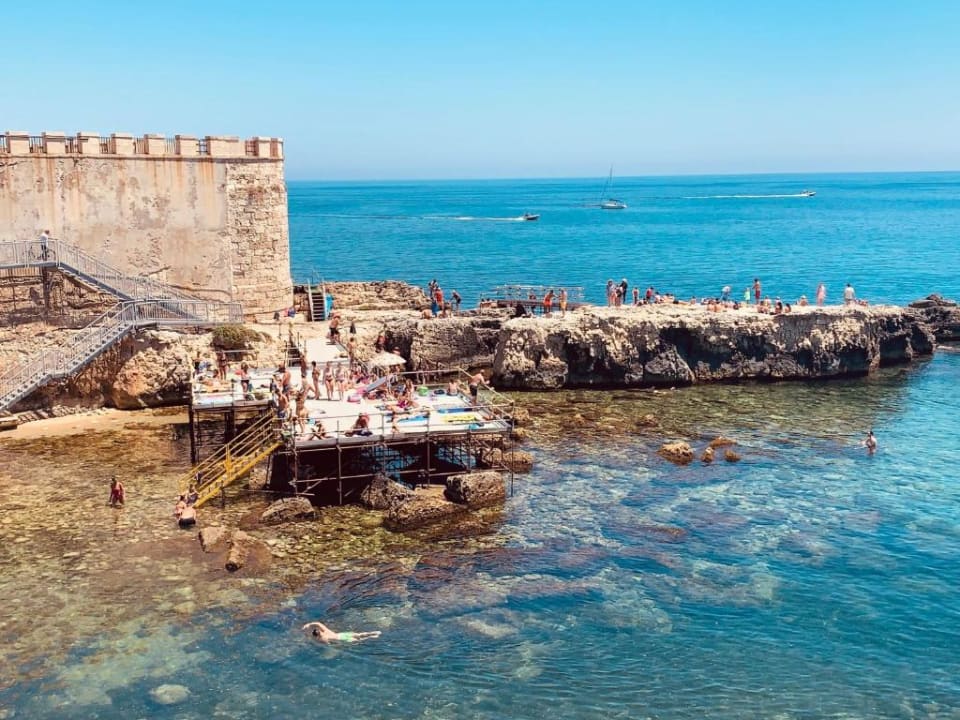
Further north, on the same coast, Forte Vigliena is a stone bastion built under Spanish rule to defend the city from pirates. Today it serves as a solarium and access to the sea: from the steps, you can descend to the rocks for a swim or a break.
Tip
For the sunset, return to the other side of the island, at Foro Vittorio Emanuele II: the sun sets on the west side.
Route map
On phone and tablet: one finger scrolls the page, two fingers move the map.
Frequently asked questions
For the main points, half a day is enough. With the Cathedral, the castle, a swim, and some breaks, you need a whole day.