


Public Garden and Porta Reale
 15 minutes
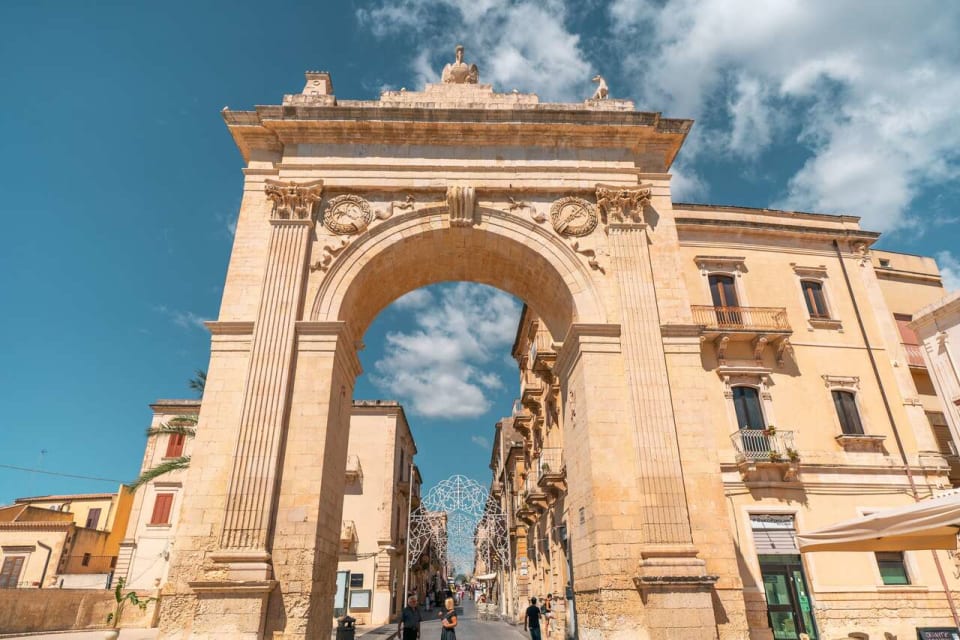
You start here because this is how Noto presents itself: a large stone arch opening onto Corso Vittorio Emanuele. Before passing underneath, take two minutes in the Public Garden, among palm trees, flower beds, and the busts of notable people from Noto. Porta Reale does not belong to the eighteenth century that you will encounter for the rest of the day. It was built in 1838, designed by the Neapolitan architect Orazio Angelini, to celebrate the visit of King Ferdinand II of Bourbon to Noto. For this reason, it has a neoclassical appearance, plainer than the baroque façades you will see later. At the top, there is a bird that the people of Noto interpret in two ways: pelican, a symbol of sacrifice, or stork, a symbol of fertility. On one side of the arch is the coat of arms of Noto, and on the other is that of the Canicarao family, whose marquis commissioned the work.
Tip
The Corso is pedestrian, so you must leave your car outside. The area around the Public Garden and Porta Reale is the most convenient starting point, but watch for signs regarding restrictions and fees, which change.
Piazza dell’Immacolata and San Francesco all’Immacolata
 15 minutes
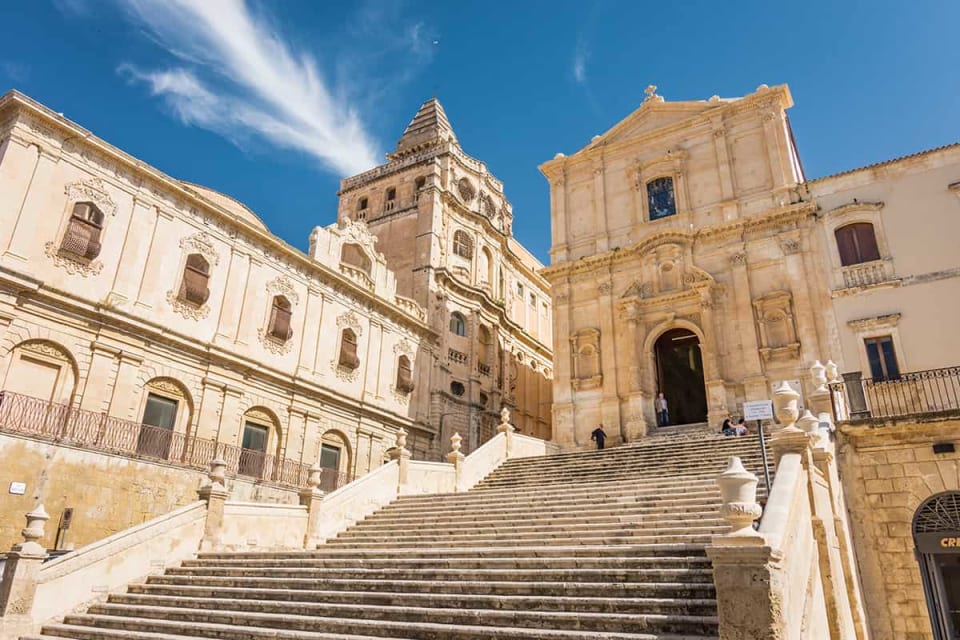
This is the first of the three squares that punctuate the Corso. On one side, a long staircase leads up to the church of San Francesco all’Immacolata. The façade is plainer than those you will encounter shortly, and for this reason, it is worth observing closely: it serves as a point of comparison. It is already the vocabulary of Noto's baroque, but spoken softly. The limestone with which almost the entire city is built changes appearance with the light: bright in the morning, warmer towards evening. If you have time, return here at the end of the day and compare.
Tip
Climb to the forecourt: from up there, the square is better understood, and you get your first glimpse of the Corso.
Church of Santa Chiara
 20 minutes
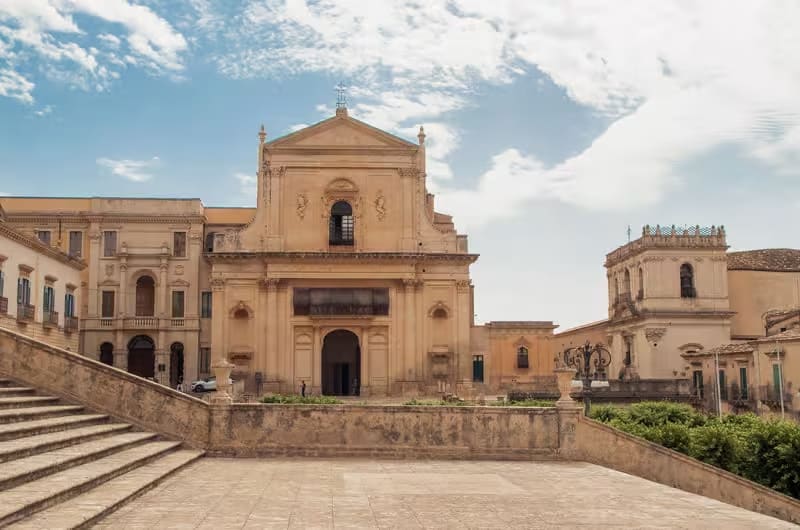
Just before the main square, you encounter Santa Chiara, built for the Benedictine order starting in 1730 based on a design by Rosario Gagliardi, the architect who signed some of the most successful churches in the Val di Noto. Inside, the layout is oval, an unusual choice that gives the interior a continuous movement. Among the artworks is a marble Madonna and Child, from the Gagini school. If you find it open, go in even just to see how the light shapes the curved walls.
Tip
The opening hours of the churches vary, and celebrations take precedence over visits: if you find it closed, try again on your return.
Piazza Municipio and the Cathedral of San Nicolò
 30 minutes
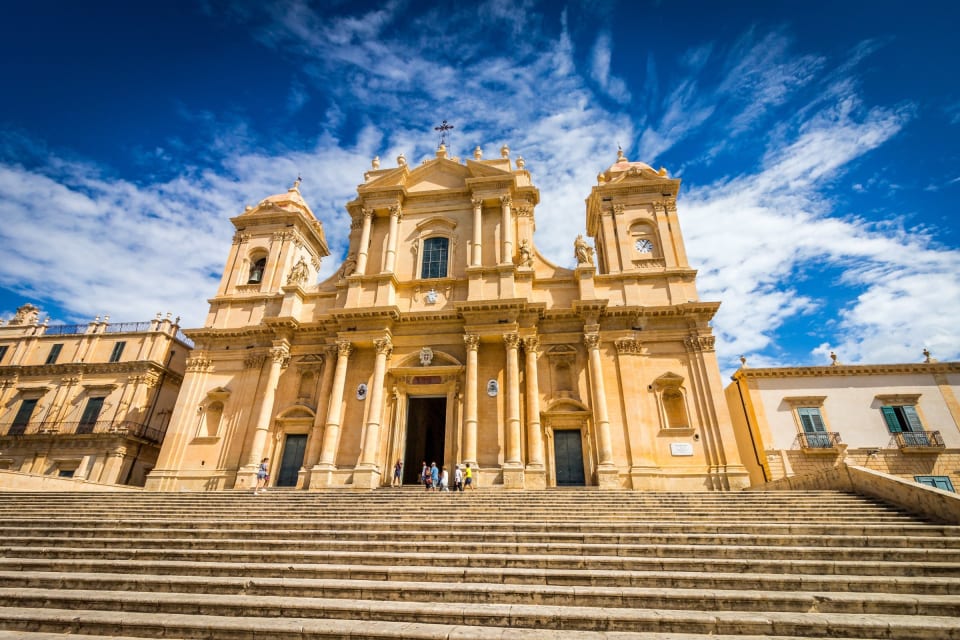
The Corso opens up and you are in Piazza Municipio, the most striking setting in Noto. The Cathedral stands at the top of a wide staircase on the north side, with the town hall facing it. If there is an image of Noto you have already seen, it is this one. Construction began in 1694, after the earthquake of 1693 that destroyed the ancient city, and the church opened for worship in 1703. The dome you see today has a more recent history: on 13 March 1996, it collapsed, along with part of the naves and some pillars. Years of excavations were needed to recover thousands of stones for its reconstruction; the Cathedral reopened eleven years after the collapse, on 15 June 2007. The frescoes of the dome are by Oleg Supereco, and the stained glass of the drum is by Francesco Mori. Inside, the silver urn containing the remains of Saint Corrado Confalonieri, the patron saint of the city, is preserved.
Tip
Sit on the steps before entering: it is the best place to view the façade and the square. Inside, remember that it is a place of worship, so shoulders and knees covered.
Palazzo Ducezio and the Hall of Mirrors
 30 minutes
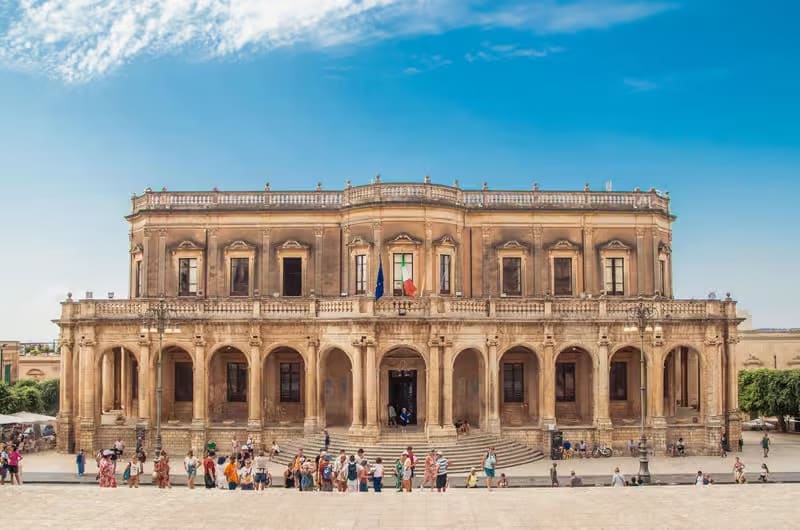
Opposite the Cathedral, with a low and curved façade on a long portico, is Palazzo Ducezio. Today it is the town hall, and indeed it is not just a monument: people work here, so not all rooms are always open. The most famous part is the Hall of Mirrors, named for the large mirrors that decorate it along with stuccos and furnishings. If the terrace is accessible, it is another good reason to enter: from up there, the Cathedral and the square can be seen from a different perspective. Even if you don’t enter, stop under the porticoes and calmly observe how the façade follows the curve of the square.
Tip
Ask at the entrance which rooms and terraces are currently open for visits: hours and access change.
San Carlo al Corso and its terrace
 20 minutes
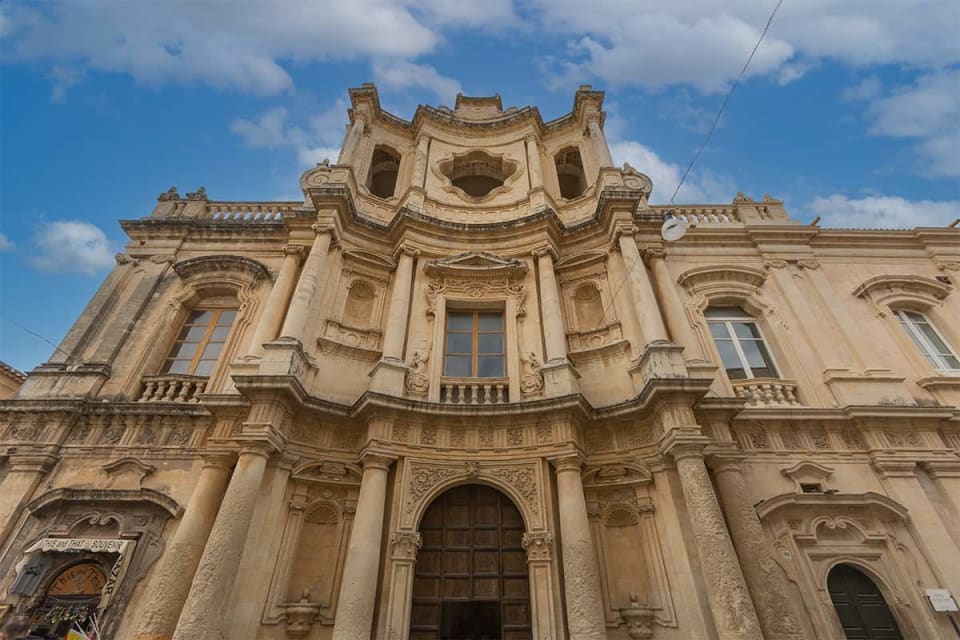
Almost opposite the beginning of Via Nicolaci stands San Carlo al Corso. The façade is concave: it seems to withdraw to make space for those arriving. The reason many come here is the terrace, from which you can view the Cathedral and the rooftops of the city from above. It is not always open: it depends on the days and times.
Tip
If the terrace is open, it is worth the climb. If it is closed, the façade can also be appreciated well from the street.
Via Nicolaci and Palazzo Nicolaci di Villadorata
 30 minutes
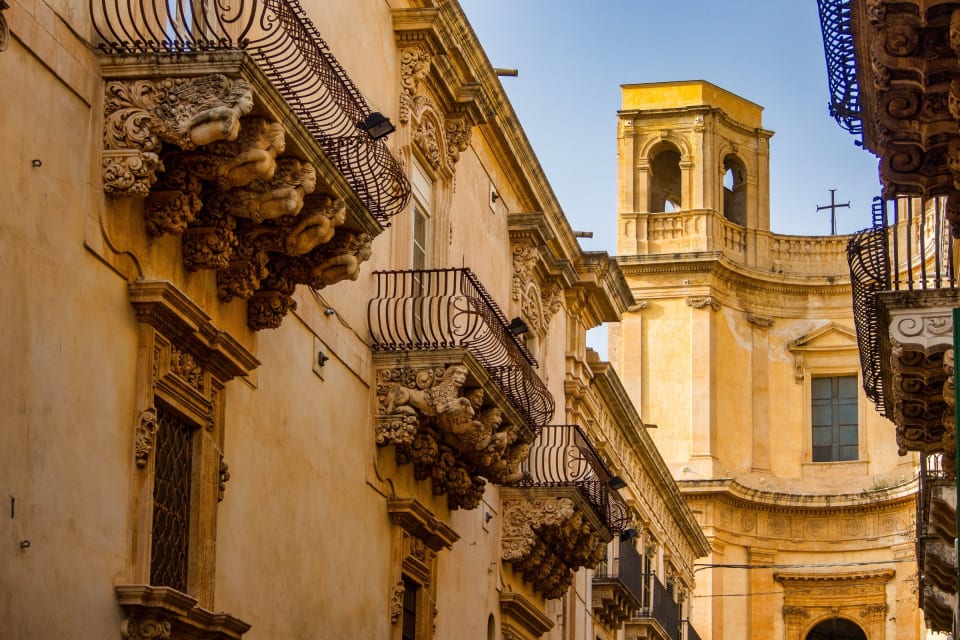
Enter Via Nicolaci: it is short, about 122 metres, steep, and one of the most photographed streets in Noto. As you ascend, on the left runs the façade of Palazzo Nicolaci di Villadorata, built in the eighteenth century for the Nicolaci princes. Look up: the wrought iron balconies rest on carved brackets featuring mermaids, chimeras, griffins, hippogriffs, centaurs, and sphinxes. It is a gallery of creatures that seems to watch those passing by. Every year in May, this street becomes the Infiorata: since 1980, the pavement is covered with designs made from flower petals. The palace can be visited with an entrance ticket.
Tip
Look at the balconies from the opposite side of the street: they are better seen. During the Infiorata, access to the street may be charged and very crowded: go early in the morning.
Church of Montevergine and Via Cavour
 20 minutes
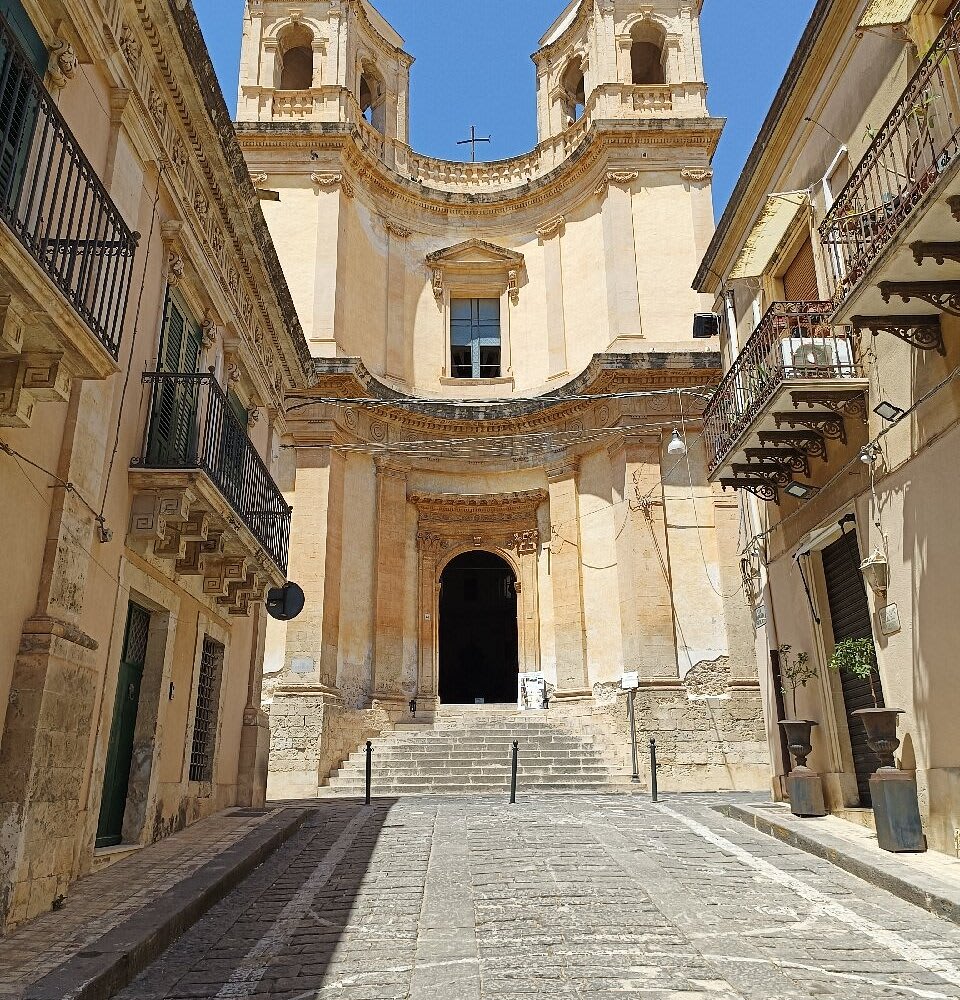
At the top of Via Nicolaci, the perspective closes with the concave façade of Montevergine. The street, the balconies, and this church together create a striking setting. From here, you can turn onto Via Cavour, which runs parallel to the Corso. At number 10, there is the door of Palazzo Di Lorenzo del Castelluccio, from 1782: over a hundred rooms, one of the largest noble residences in the Val di Noto. Montevergine also has a terrace: if you find it open, it is another opportunity to view the rooftops of Noto from above.
Tip
As you descend, turn around: the perspective of Via Nicolaci viewed from above, with the balconies in a row, is the best photo of the day.
Piazza XVI Maggio: San Domenico, the Fountain of Hercules, and the Theater
 30 minutes
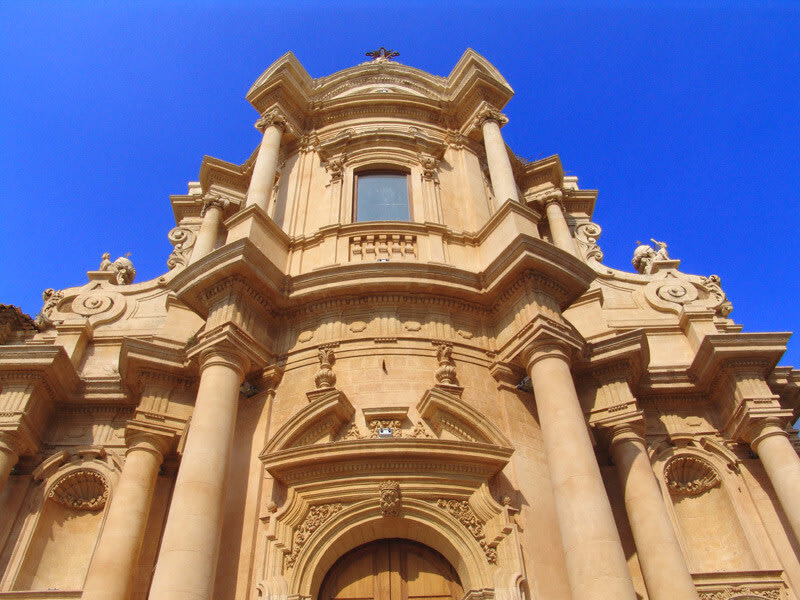
The third square along Corso Vittorio Emanuele has a small garden in the centre and the Fountain of Hercules. On the north side rises the convex façade of San Domenico, considered one of the masterpieces of Rosario Gagliardi and built between 1703 and 1727: Doric at the bottom, Ionic at the top. Opposite, beyond the garden, is the Tina Di Lorenzo Theatre, inaugurated on 4 December 1870 as Teatro Vittorio Emanuele and renamed in 2012 in honour of Tina Di Lorenzo, an actress who lived between 1872 and 1930. It was built after 1837, when Noto became the provincial capital and felt the need for a theatre of stature. Here you will also find the tourist office: useful for asking about updated visiting hours.
Tip
The garden in the center of the square is a good place for a break at the end of your journey. If you still have energy, head back along the Corso in the late afternoon light: the colors change.
Route map
On phone and tablet: one finger scrolls the page, two fingers move the map.
Frequently asked questions
To walk along Corso Vittorio Emanuele and admire the façades and squares, two or three hours is sufficient. If you want to enter the palaces and churches, go up to the terraces, and take a few breaks, the route takes a whole day.