

Corso Umberto I, the hidden river beneath the road
 20 minutes
You start at the bottom of the valley, on Corso Umberto I, the main street of Modica Bassa. It is long and flat, with historic buildings, cafés with outdoor tables, and shops where chocolate appears in all its variations. To understand where you are, look at the sides of the valley: Modica sits on a plateau carved by canyons, the cave, and is divided into Modica Bassa, at the bottom, and Modica Alta, on the hills, connected by hundreds of steps. The Corso follows the path of two rivers that now flow covered, just beneath the road. Among the buildings, you can recognise the Teatro Garibaldi, neoclassical, built in the early 1800s.
Tip
Today's tour is a continuous up and down: wear comfortable shoes and bring water. Leave your car outside the centre and watch for signs regarding restrictions and fees, which change.
Palazzo della Cultura: the Civic Museum and the Chocolate Museum
 40 minutes
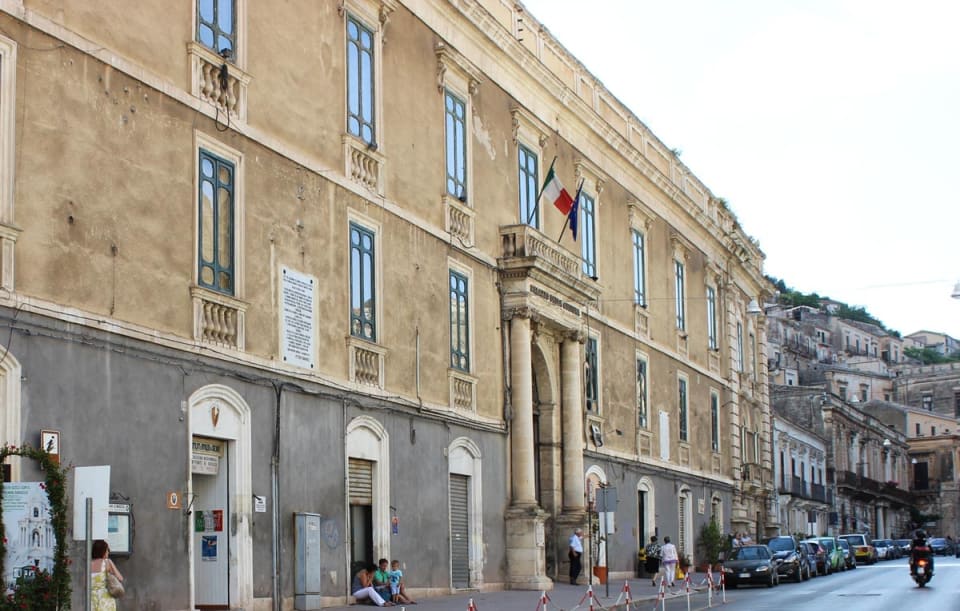
At number 149 on the Corso, you find the Palazzo della Cultura, in the former monastery of the Benedictines. It houses two museums: the Civic Archaeological Museum, with finds from the Iblei territory from the Paleolithic to the Hellenistic age, and the Chocolate Museum. The chocolate of Modica is a unique product. It is made cold, with cocoa paste heated to about forty degrees: the sugar does not completely dissolve and remains in crystals, which is why you feel the grain under your teeth. Since 2018, it has the European PGI, the first for chocolate in Europe. The tradition links it to Spanish rule and tells of a recipe of Aztec origin; historians do not all agree on this last part. The museum helps you get an idea.
Tip
Museum opening hours and closing days change: check before you go. If you buy a bar, look for the PGI label.
Cathedral of San Pietro
 25 minutes
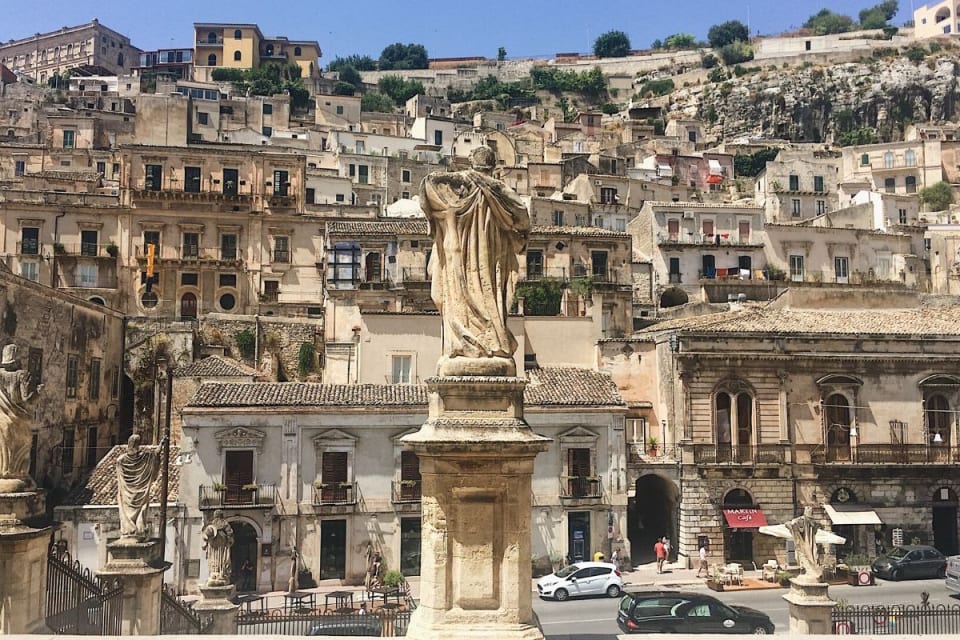
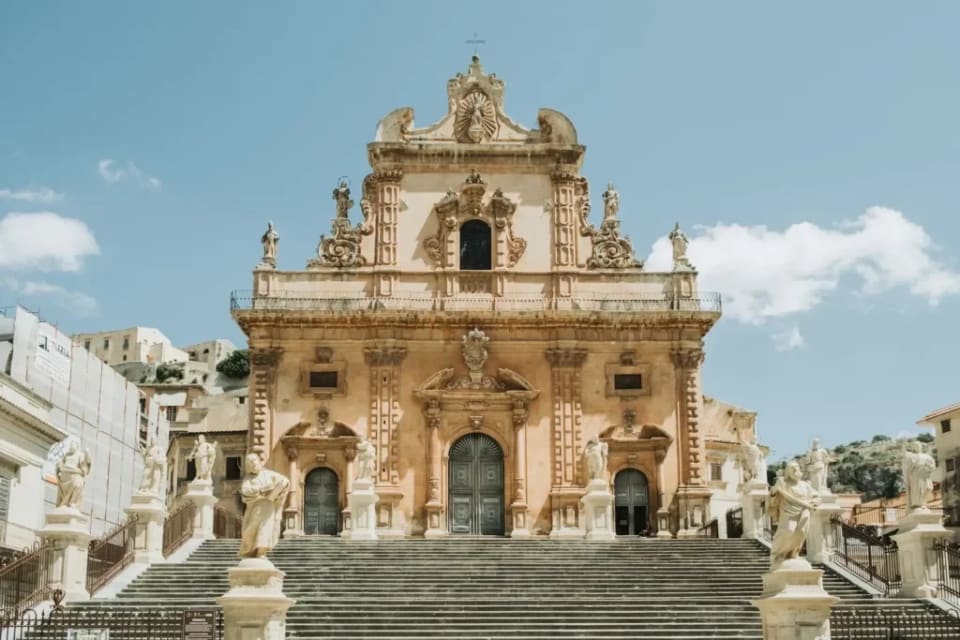
A little further along, on one side of the Corso, a staircase leads up to the Cathedral of San Pietro, the cathedral of Modica Bassa. Along the steps are the statues of the twelve apostles, which direct your gaze to the façade. The church was destroyed by the earthquakes of 1613 and 1693 and rebuilt in the 18th century in baroque style. The interior has three naves. In Modica, there are two cathedrals: this one, below, and that of San Giorgio, above. It is worth visiting both, as they complement each other.
Tip
Halfway up the staircase, stop and turn around: from there, you can see the Corso from above.
The rock church of San Nicolò Inferiore
 25 minutes
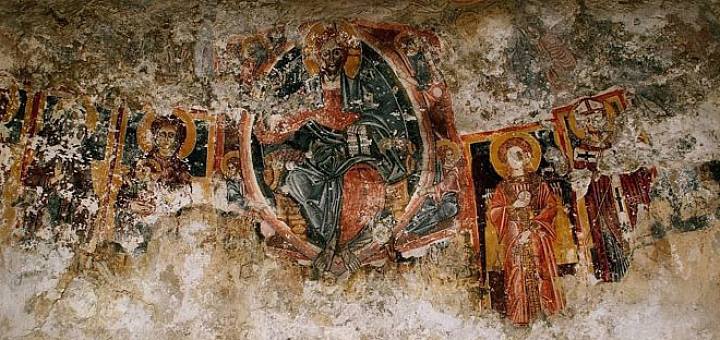
On Via Clemente Grimaldi, the rock church of San Nicolò Inferiore is hidden, considered the oldest in Modica. It is carved into the rock and was rediscovered by chance in 1987: it is said that a boy looking for a ball entered a cave used as a storeroom, and the scholar Duccio Belgiorno immediately recognised its value. Inside, in a single hall, there are frescoes of Byzantine tradition. In the apse, the Christ Pantocrator dominates, enclosed in a mandorla. It is a rare example of architecture
Tip
It is only open on certain days and times: check before you go.
The house museum of Salvatore Quasimodo
 25 minutes
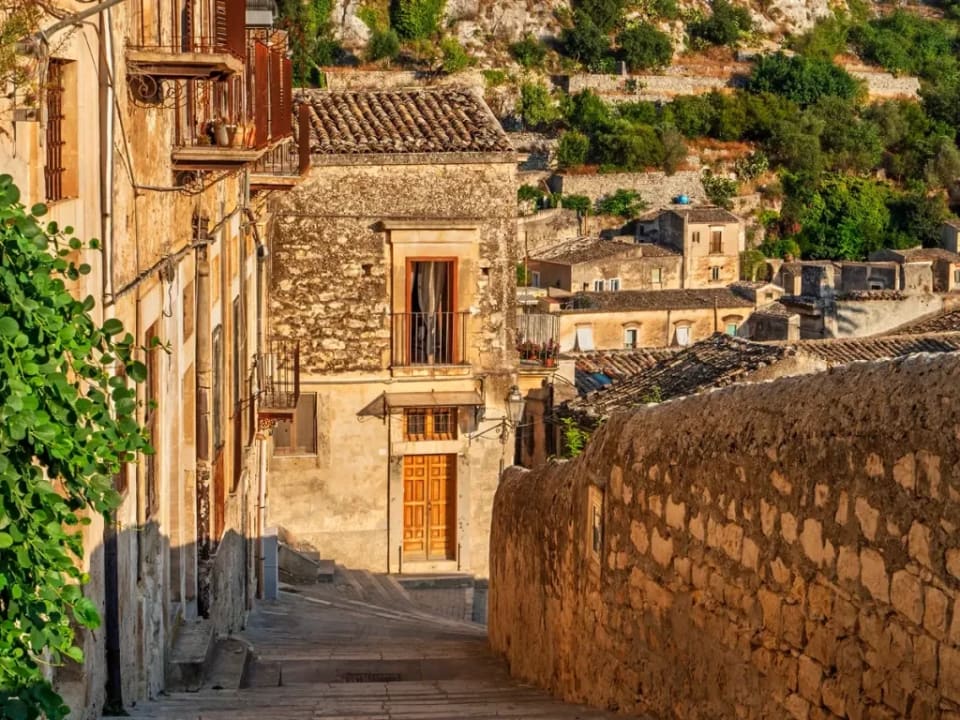
Climbing through the alleys of the Sbalzo district, you arrive at via Posterla, where the house museum of Salvatore Quasimodo is located, the poet born in Modica in 1901 and Nobel Prize winner for literature in 1959. Inside, you find furniture, photographs, special editions of his books, and a video of the Nobel award ceremony. One room reconstructs the Milanese study where he wrote. There is also an interesting fact: according to various reconstructions, the poet was neither born nor lived in this house, which however tradition and the city indicate as his birthplace. The fact remains that Quasimodo belongs to Modica.
Tip
The museum is small: twenty minutes is enough. Check opening hours and days before you go up.
The Castle of the Counts and the Clock Tower
 40 minutes
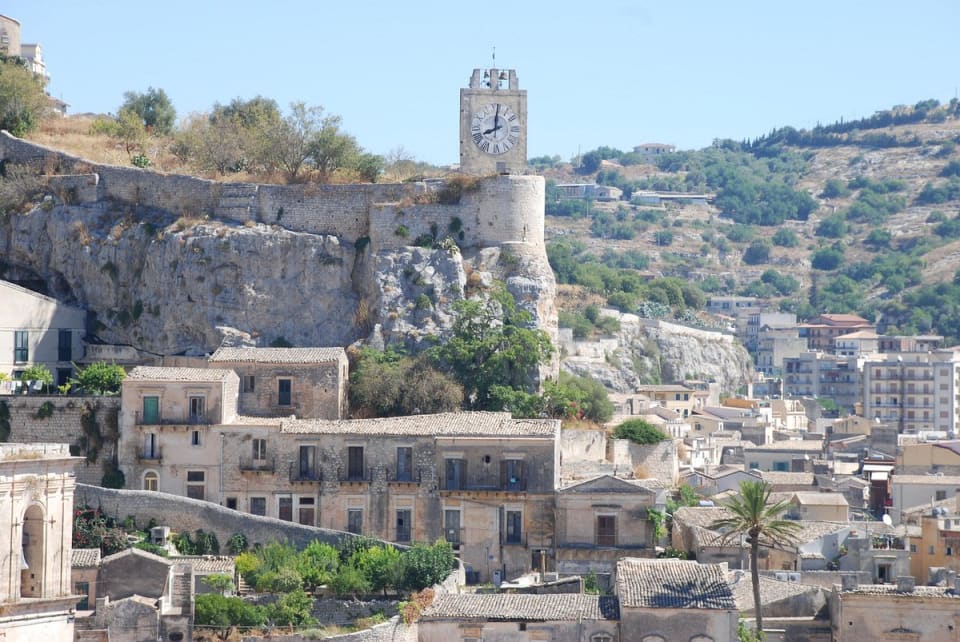
Above the houses, on a rock spur with two sheer sides, stands the Castle of the Counts. It was a fortress, prison, and residence of the Counts of Modica; today, only a few parts remain: the polygonal tower, the ancient prisons carved into the rock, and the famous Clock Tower. The tower, built in 1725 on the remains of a medieval watchtower, has a large dial visible from almost the entire city. The counterweight mechanism still works. The visit is also worth it for the caves at the base: Modica originated as a rock settlement, and even today many houses are built in front of old caves.
Tip
Access and ticket prices change: check opening hours and openings before you go up. The climb is steep: take it easy.
The Cathedral of San Giorgio and its staircase
 45 minutes
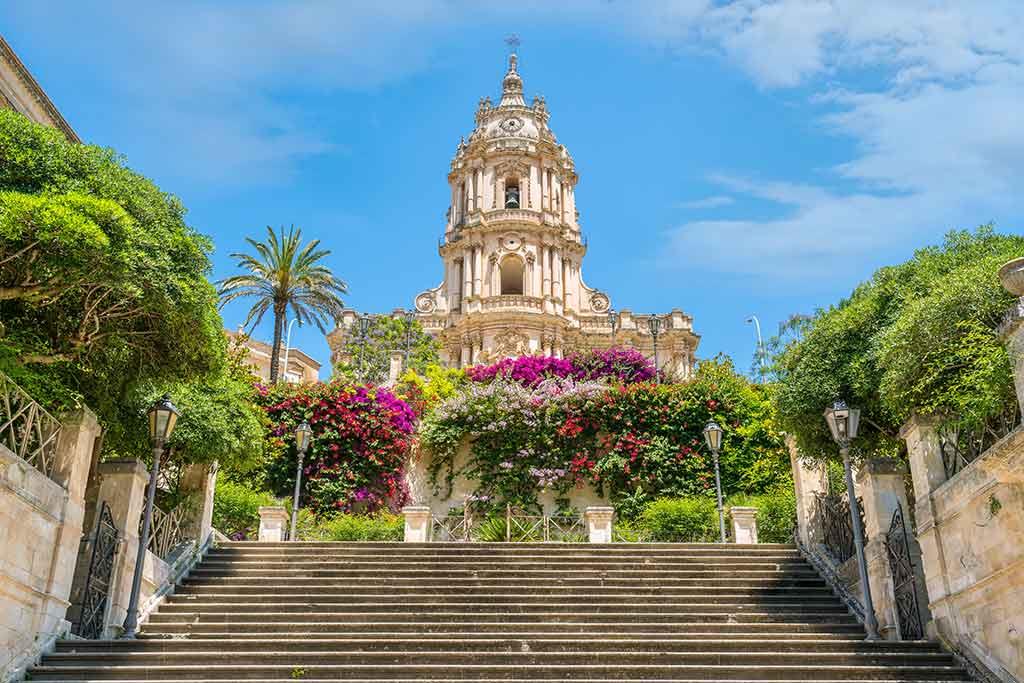
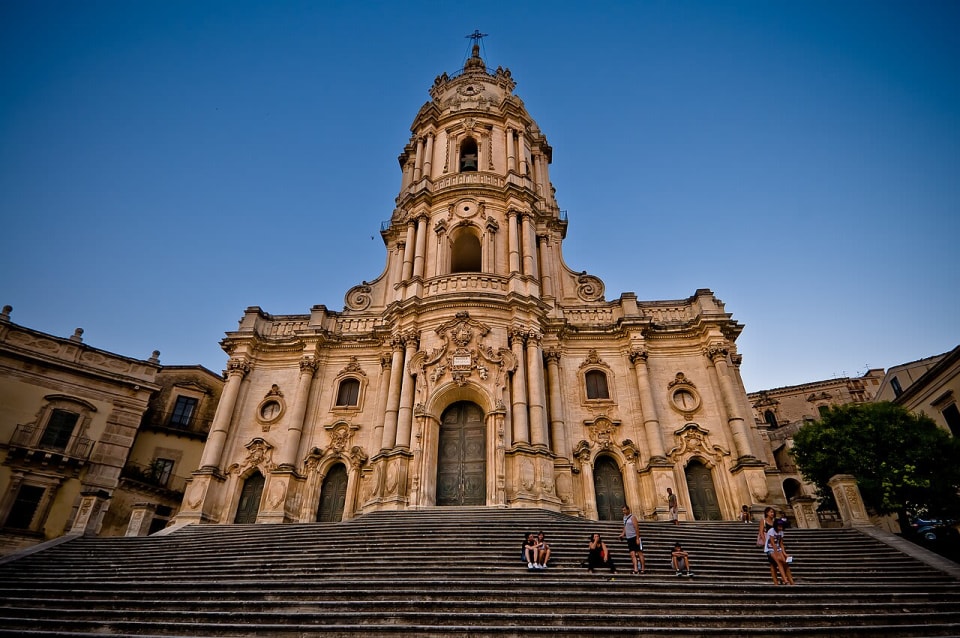
The Cathedral of San Giorgio is the symbol of Modica and one of the most striking monuments of Sicilian Baroque. It stands atop a monumental staircase: guides count from 164 to 250 steps, depending on where you start. Next to it runs the hanging garden known as Orto del Piombo. The tower façade is 62 metres high. It was built starting from 1702 and only in 1842 was the iron cross placed on the spire. The design is attributed to Rosario Gagliardi, the same architect of San Domenico in Noto and San Giorgio in Ragusa Ibla. Inside the church, there are five naves. Stop: after the climb, it’s the right moment to catch your breath.
Tip
If the steps weigh you down, go up Via San Giorgio: it’s the classic and less tiring route.
Belvedere San Benedetto
 20 minutes
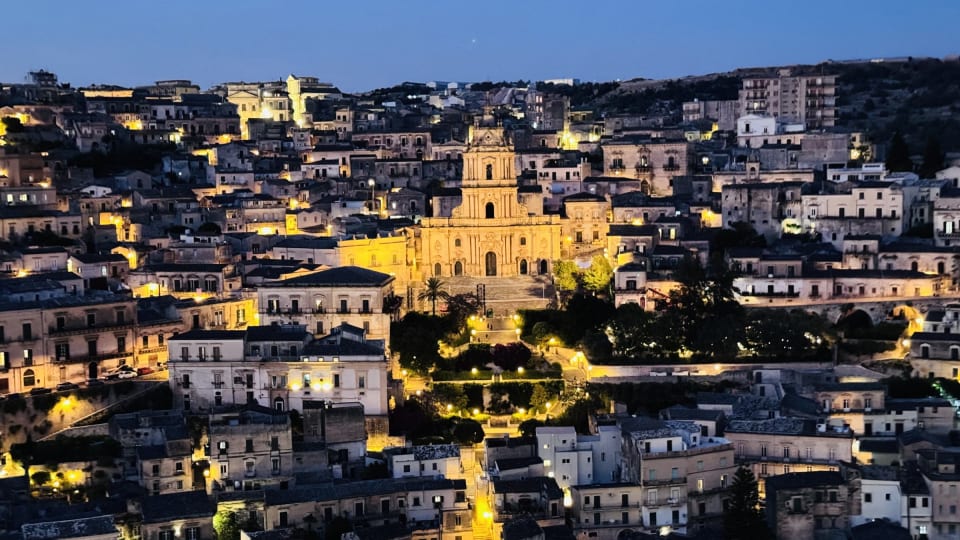
In front of the cathedral, along Via San Benedetto da Norcia, there’s the Belvedere San Benedetto. From here, you see everything together: the tower façade, the staircase descending, and the town stretching out beneath you. It’s one of the most photographed views of Modica, and there are some benches to stop and rest. It can be reached on foot with about ten minutes of climbing, or by car, as it is outside the centre.
Tip
Stop here calmly: it’s the best spot to understand the layout of the town.
San Giovanni Evangelista and Santa Maria del Gesù
 30 minutes
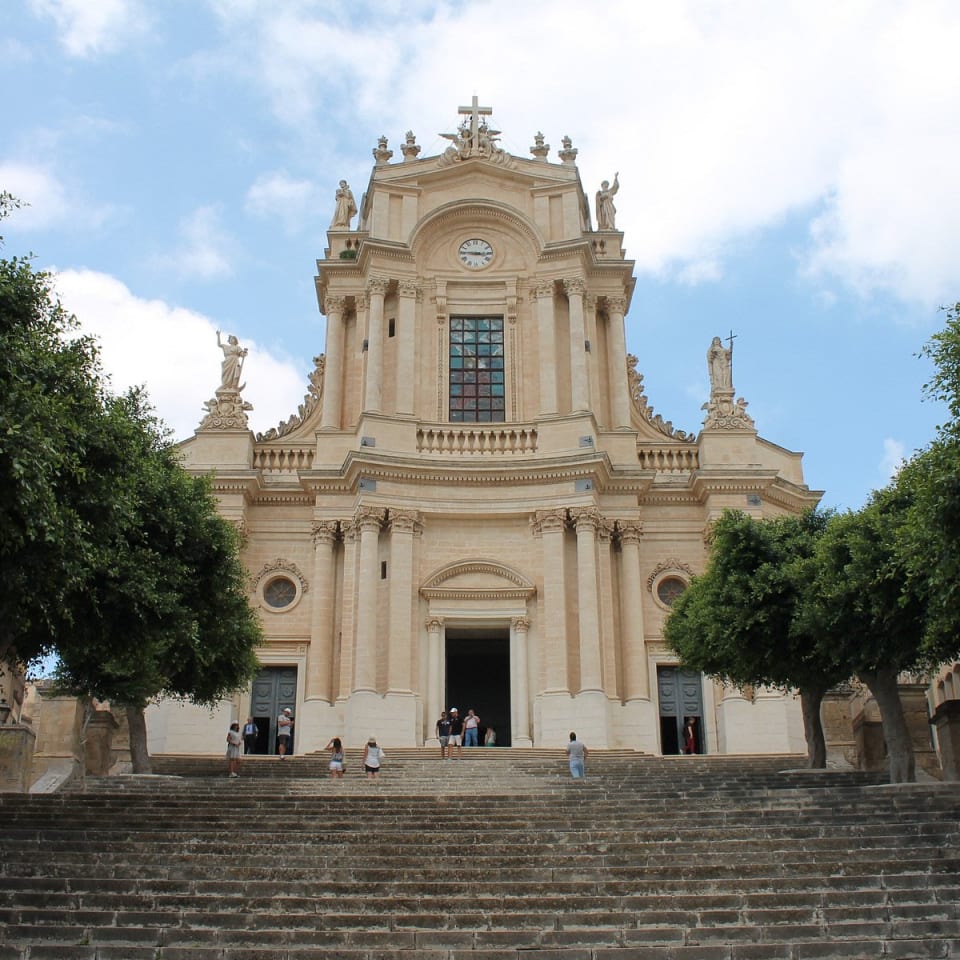
In the highest part of Modica Alta, a staircase with statues leads to the church of San Giovanni Evangelista, in neoclassical style, with the façade redone between the 19th and 20th centuries. It’s an exception among the Baroque churches of the town. Just beyond is the complex of Santa Maria del Gesù, one of the few late Gothic parts remaining after the earthquake of 1693, from the late 15th century to the early 16th century. Look at the portal and the cloister, among the original parts.
Tip
The interiors are open at variable hours: if you find it closed, the façade and the staircase are still worth the climb.
The sunset from Pizzo Belvedere
 30 minutes
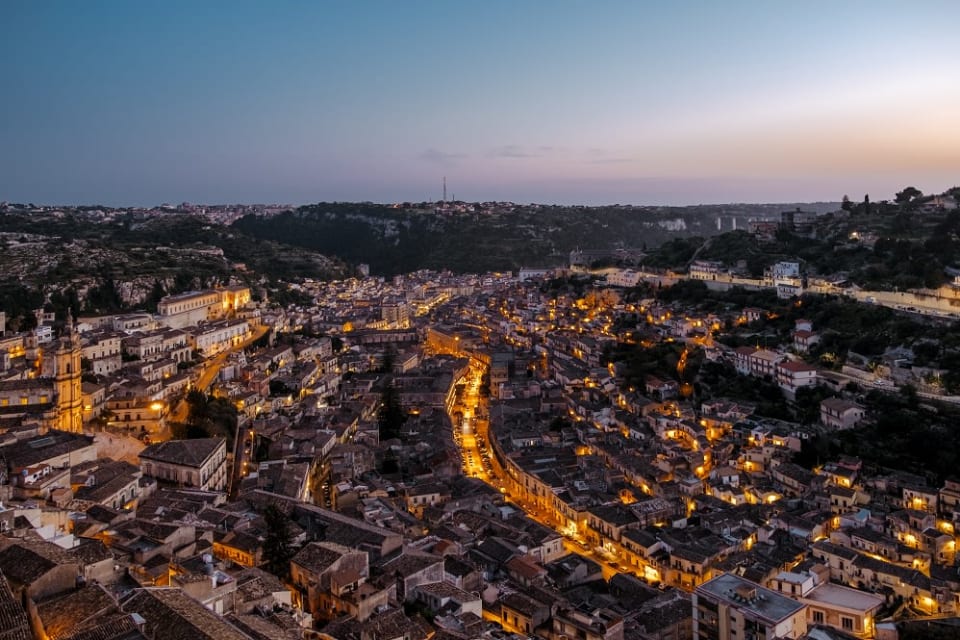
Descend through the alleys towards the lower part and end the day at Pizzo Belvedere, a terrace that looks over Modica from another hill. From here, you see Modica Alta with the cathedral tower and, further down, Modica Bassa, split in two by Corso Umberto I. The best time is at sunset, when the warm light bathes the façades of the high town.
Tip
Check the time of sunset and arrive a little early: the light changes quickly, and in the dark, the staircases require attention.
Route map
On phone and tablet: one finger scrolls the page, two fingers move the map.
Frequently asked questions
To see the two cathedrals, the Corso and the belvederes, half a day is enough at a brisk pace. With museums, the castle, and breaks, you need a whole day, as there are many climbs between the lower and upper town.