

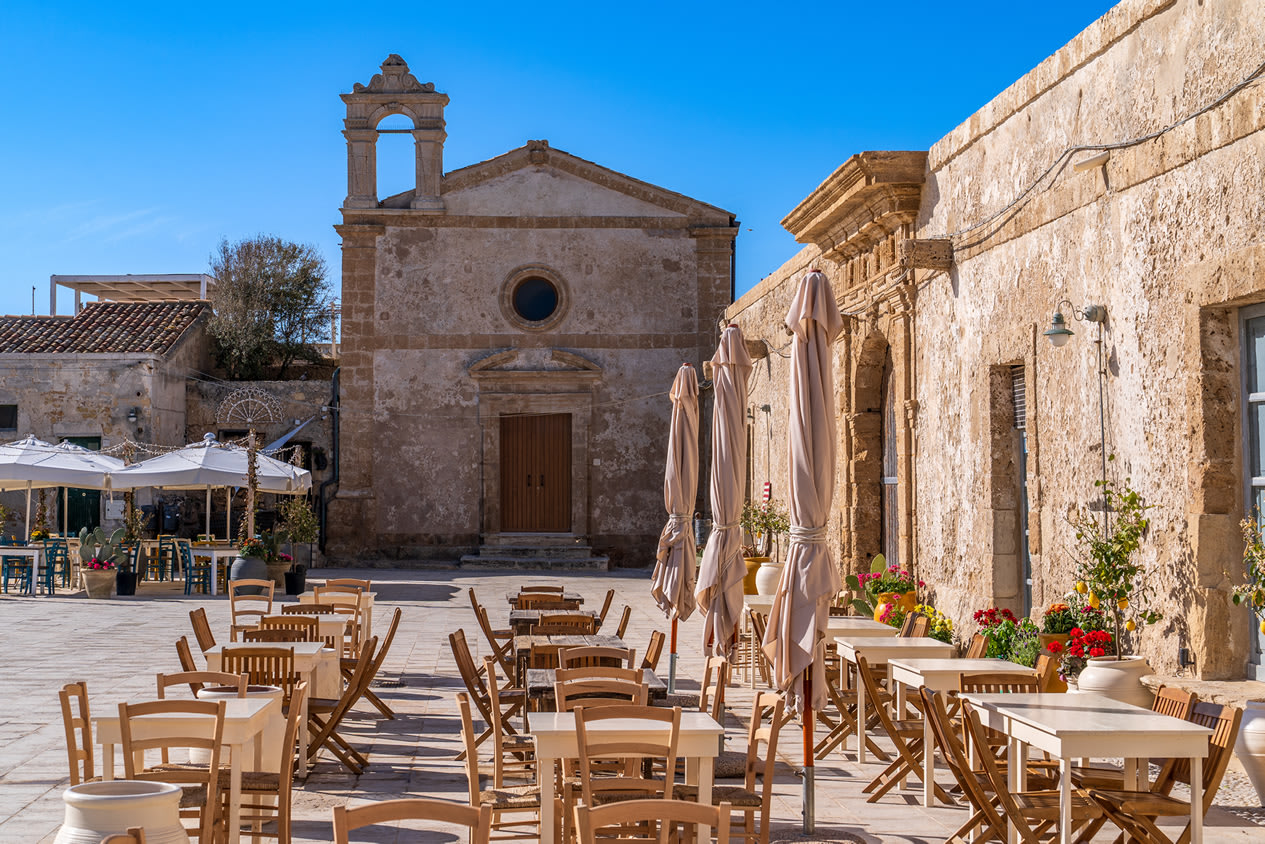
Piazza Regina Margherita and the fishermen's houses
 25 minutes
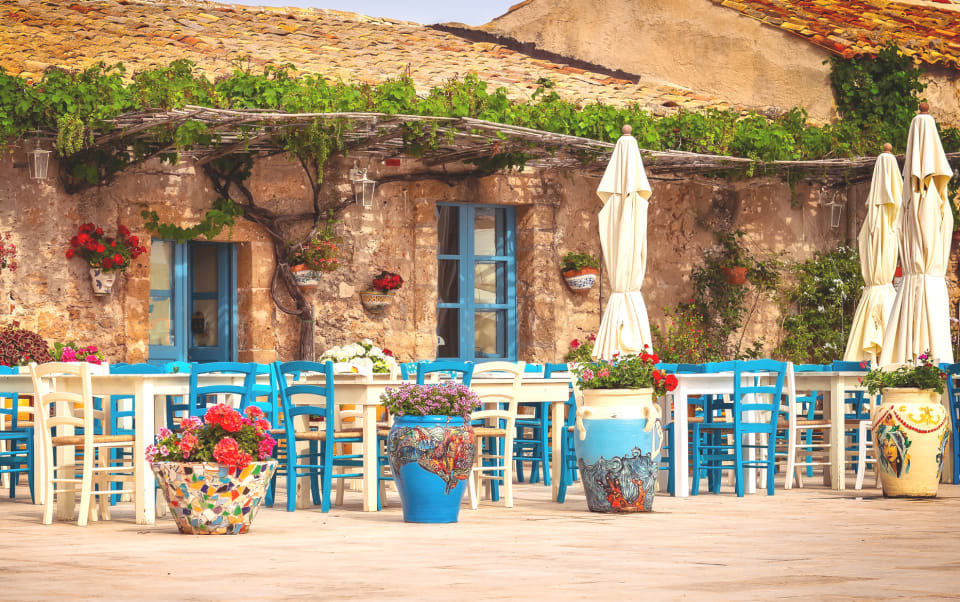
You start from Piazza Regina Margherita, the heart of Marzamemi and the image you find in almost all the photos of the village. The first stops are all just a few steps apart, but there is much to see. Around the square are low houses, where the fishermen's families lived: they were restored in 1752, along with the palace, and one of them still has the date carved above the door. The square is also known as «piazza delle due chiese», because two churches face each other from opposite sides. The village was born with the tuna fishery: according to tradition founded in the Arab era, around the year 1000, in 1630 it passed to the princes of Villadorata.
Tip
In summer the square fills with tables: come early in the morning or in the late afternoon to walk around calmly. There are parking spaces a few hundred metres away.
The two churches of the square
 20 minutes
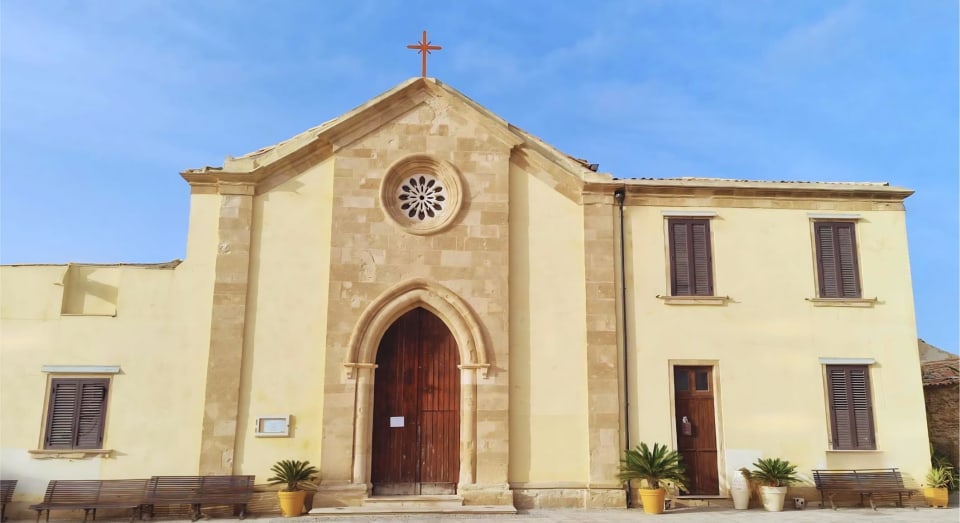
The new church is San Francesco di Paola, the patron saint of the village: built between 1945 and 1950 in sandstone, it has a gabled façade with a large rose window and a single nave interior with a Gothic vault. Every year, the Monday after Ferragosto, the statue of the saint goes in procession, even at sea on a decorated fishing boat. On the opposite side is the chiesa della Tonnara, the ancient San Francesco di Paola, also known as the church of the Madonna del Carmelo: it dates back to 1752 and is connected by an arch to the entrance of the square. Today it is desecrated and closed, but the simple façade, with the sail bell tower, is clearly visible from outside.
Tip
Look at the two façades one after the other: the old and the new tell two eras of the village. The church of the Tonnara is not open for visits.
The Palace of the Princes of Villadorata
 20 minutes
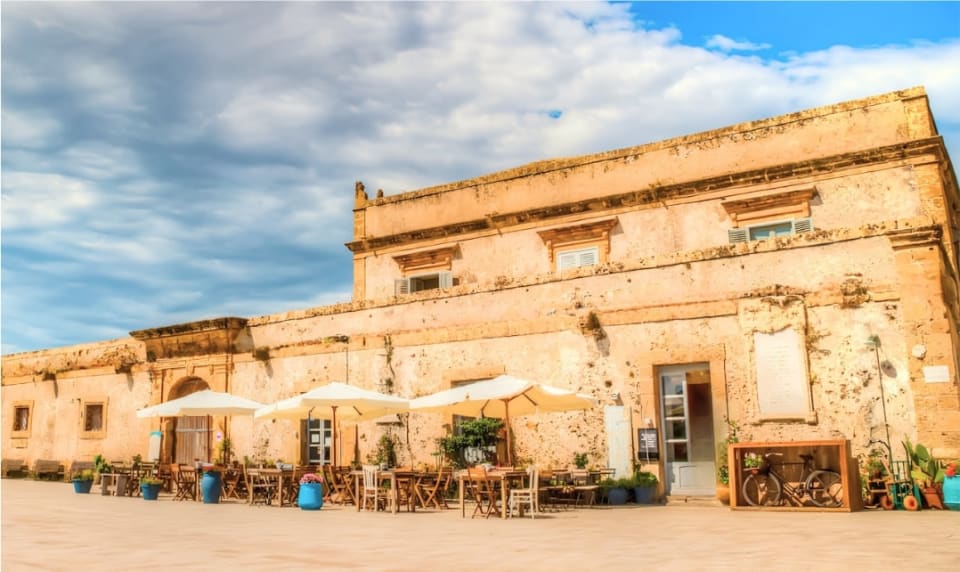
On the west side of the square stands the Palazzo dei Principi di Villadorata, built in 1752 in sandstone: a sober example of Sicilian Baroque, with a large arched portal and, above, the coat of arms of the family. Look at the stone gutters with human faces. It was the summer residence of the Nicolaci, princes of Villadorata, and from here they oversaw the trades related to fishing and tuna processing. Today its somewhat worn appearance makes it even more evocative, and the inner courtyard is used for events and ceremonies.
Tip
The palace is mainly viewed from outside: the interior is only opened for events or visits, so check if there’s anything scheduled.
The old tuna fishery and the loggia degli Scieri
 30 minutes
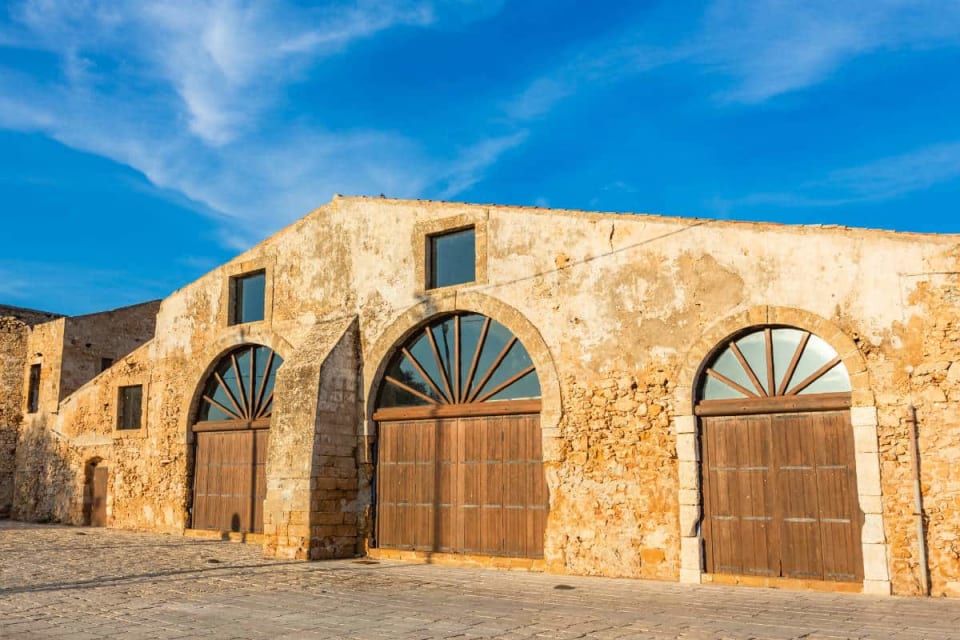
Behind the palace, you enter the old tuna fishery of Marzamemi, one of the oldest in Sicily. It has changed shape several times and had its great development in the mid-1700s; the mattanza and tuna processing continued until after the Second World War, and today the tuna fishery is no longer in operation. The ancient boat sheds have become the loggia degli Scieri, a single large hall of over 700 square metres, marked by tuff arches and open directly to the sea. The scieri were the large boats used for tuna fishing, which descended into the water from here.
Tip
Access depends on events and organised visits: check in advance, as the loggia is one of the most beautiful views of the village.
La Balata, the second small port
 20 minutes
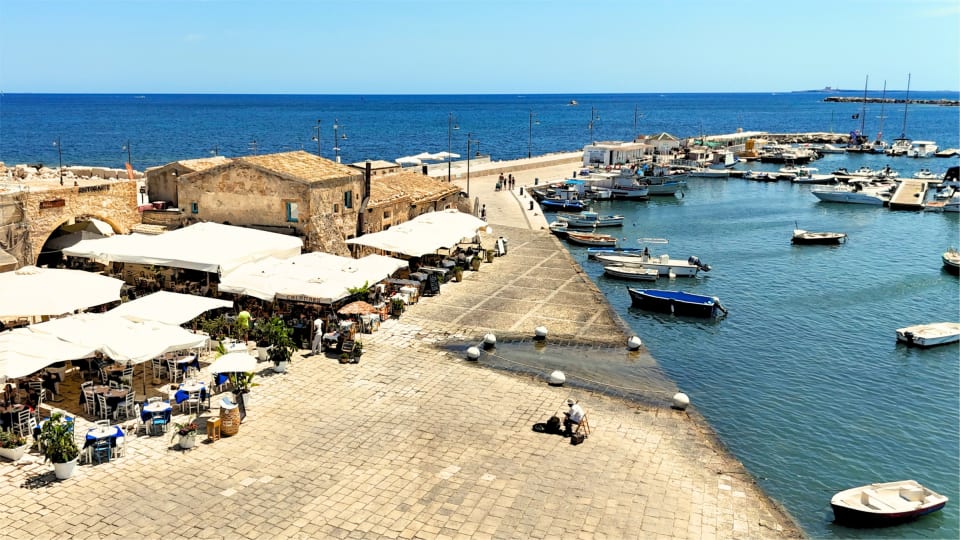
Just outside the square is the Balata, the second small port of the village: the name comes from Arabic and recalls the stone slabs of the old pavement. On its edge stand two large buildings, the Vecchia Fabbrica, once an ice factory, and the Casa Cappuccio. In summer, the Balata comes alive: in July it hosts the Festival del Cinema di Frontiera.
Tip
If you come in July, check the festival programme: the Balata changes completely from day to night.
The San Francesco di Paola pier
 15 minutes
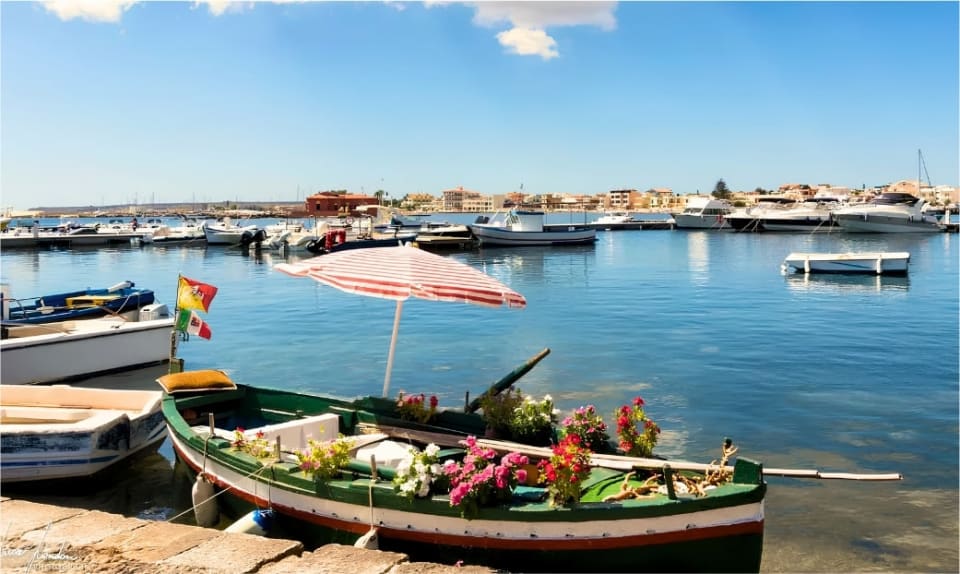
The molo San Francesco di Paola, dedicated to the patron saint, has been recently redeveloped with a pavement of Comiso stone and lava stone that extends towards the sea, like a small walkway. On the sides are the fishing boats, which still go out every day, with coiled ropes and spread nets. From the end, you can see the square and the village from the outside.
Tip
Go all the way to the end: it’s the best spot to photograph the village with the boats in the foreground.
The Vicolo delle Sirene
 10 minutes
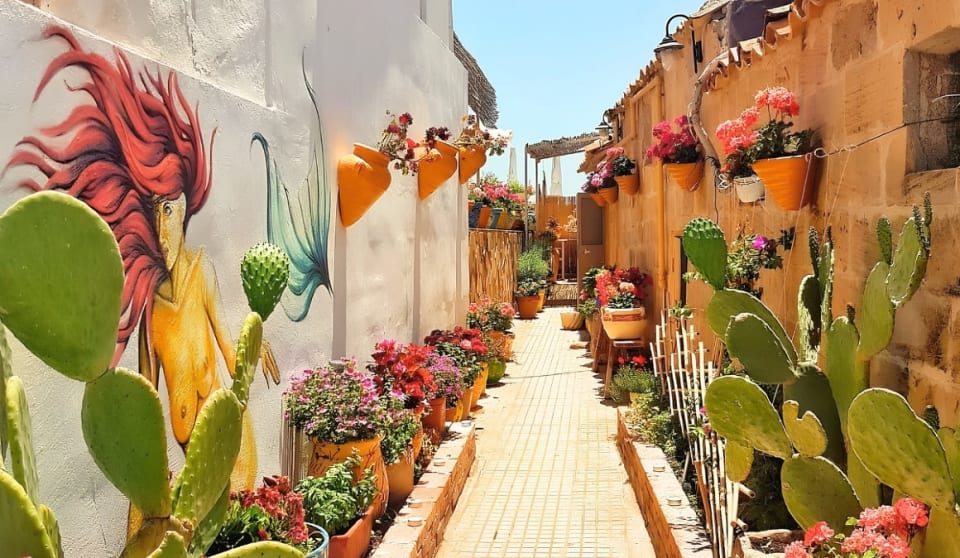
Returning to the square, before reaching the sea, take the Vicolo delle Sirene: it’s one of the most photographed places in Marzamemi, along with the square. The name comes from the large mural that decorates an entire wall: the sirens have fair skin and fire-red hair, and seem to come to life on the wall. The houses of the village are decorated in different ways and often adorned with plants and flowers: a short stop, but among the most photographed.
Tip
The alley is narrow and very photographed: take your time and leave space for those passing by.
Spinazza Coast
 60 minutes
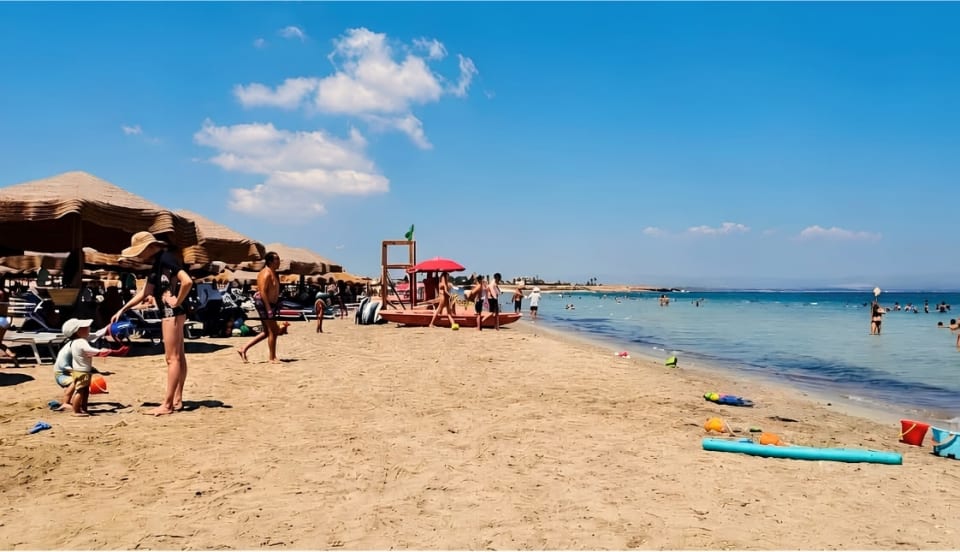
Finish your tour at Spinazza Coast, the closest beach to the village, just a few hundred metres from the square: sand, clear water, and a stretch that is mostly free, with some equipped establishments and refreshment points. In summer, it is very popular, especially in the late afternoon, before people return to the village for dinner.
Tip
If you want a quieter spot, go early in the morning or outside of the weekend.
Route map
On phone and tablet: one finger scrolls the page, two fingers move the map.
Frequently asked questions
The village can be explored in one or two hours. With the beach, some breaks and a stop for a meal, it takes about half a day; if you also add Vendicari, it takes a full day.